


Transport fares rise after fuel price hike across Pakistan
 Rabbia Zafar
|
2 hours ago
Rabbia Zafar
|
2 hours ago
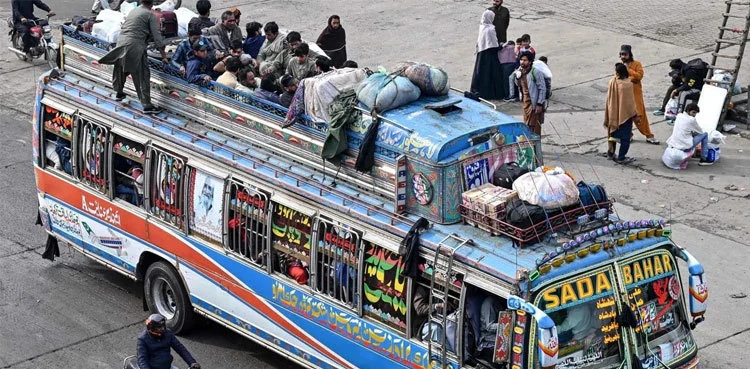
Public transport fares have increased across Pakistan following a sharp rise in petrol and diesel prices, raising concerns about a new wave of inflation. Transporters in several cities, including Rawalpindi, have already implemented significant fare hikes.
According to reports, taxi drivers, rickshaw operators, and online bike-hailing services have raised fares by up to 35%. Meanwhile, intercity bus fares in different parts of the country have increased by 25 to 30%, in many cases without official approval. As a result, commuters are facing higher travel costs.
Transporters say the increase in fares is unavoidable. They argue that the recent surge in fuel prices has made it difficult to operate at previous rates. Therefore, they insist that fares cannot be reduced under current conditions.
Maryam Nawaz orders immediate reduction in transport fares following diesel price cut
The government recently raised petrol prices by Rs138 per litre, bringing the rate to Rs458.40. Similarly, diesel prices increased by Rs184 per litre, reaching Rs520.35 per litre. Due to these increases, transportation costs have risen sharply.
Experts warn that higher transport costs will also affect the prices of essential goods. Since goods are transported across the country by road, any increase in fuel costs is likely to push up overall inflation. Consequently, the general public may face further financial pressure in the coming weeks.
Earlier, a high-level meeting was held at the Finance Division to review petroleum prices and targeted subsidy mechanisms. The meeting was chaired by Finance Minister Muhammad Aurangzeb and attended by provincial chief ministers and senior officials.
During the meeting, participants discussed ways to manage the economic impact of rising fuel prices. However, no immediate relief measures for transport fares were announced, leaving commuters concerned about rising expenses.


7 minutes ago

14 minutes ago

21 minutes ago

32 minutes ago

38 minutes ago

45 minutes ago
- A US federal judge has dismissed sexual harassment claims filed by Blake Lively against actor and director Justin Baldoni, significantly…
- US Defence Secretary Pete Hegseth has forced Army Chief of Staff General Randy George into early retirement during the ongoing…
 The US-Iran conflict entered a critical phase on its 34th day, with intensified military strikes and rising regional tensions. Recent…
 Four astronauts aboard NASA’s Artemis II mission are now on their way to the Moon after a successful engine burn,…



- Olivia Munn has spoken about her experience battling breast cancer, highlighting the crucial role her husband, John Mulaney, played throughout…
- A recent international study suggests that a drug being tested for Hepatitis C may also fight Hepatitis E. Hepatitis E…
 A measles outbreak has been reported in Kasur district, Punjab, affecting several children in a local village. Rescue sources confirmed…
 ISLAMABAD – Pakistan’s National Emergency Operations Center (NEOC) confirmed the country’s first wild polio case of 2026 on Thursday. The…





- Transporters across Pakistan have raised serious concerns following a sharp…7 minutes ago
- King Charles III and Queen Camilla appeared in a newly…14 minutes ago
- The judicial commission formed to investigate the deadly Gul Plaza…21 minutes ago
- A suicide attack near a police station in Bannu claimed…32 minutes ago