


US-Iran conflict escalates as strikes intensify and tensions rise
 Rabbia Zafar
|
1 hour ago
Rabbia Zafar
|
1 hour ago
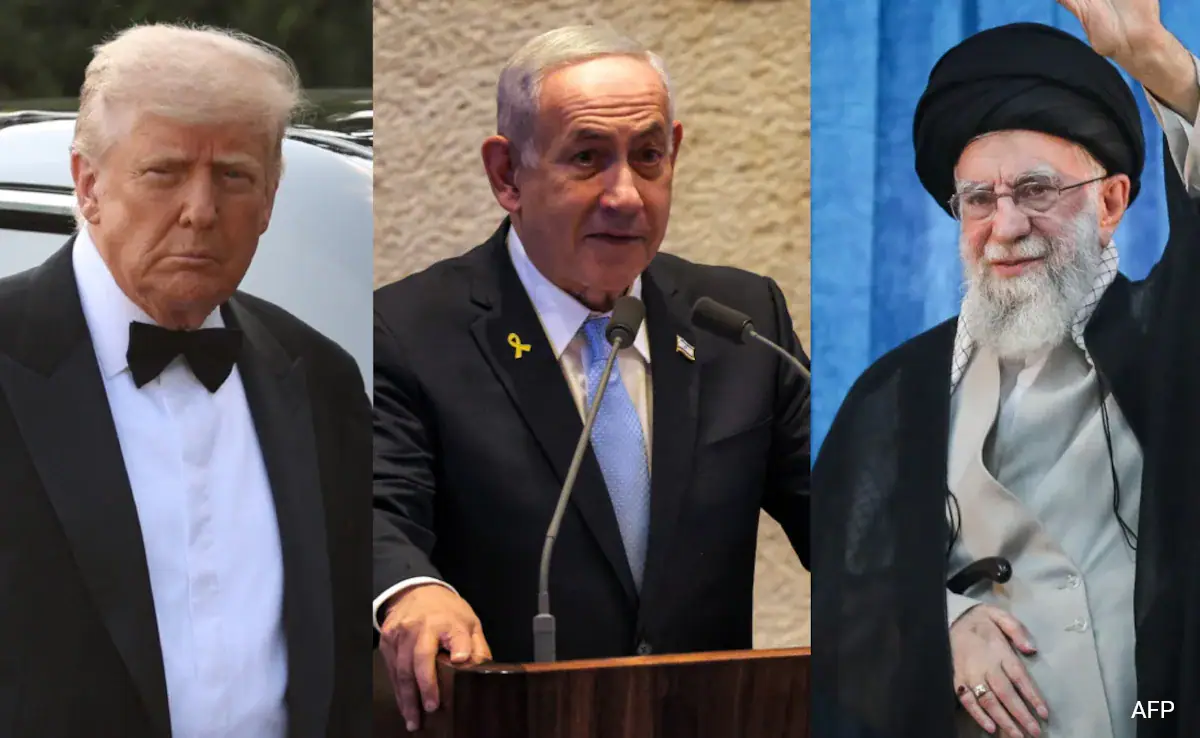
The US-Iran conflict entered a critical phase on its 34th day, with intensified military strikes and rising regional tensions. Recent remarks by US President Donald Trump have further hardened positions, reducing hopes for immediate de-escalation.
In his address, Trump claimed that US and Israeli objectives were nearing completion. However, he also announced plans to continue military operations for the next two to three weeks. He warned Iran of severe consequences if it failed to reopen the Strait of Hormuz, a key global oil route.
Shortly after the speech, Iran launched a strong response. The Islamic Revolutionary Guard Corps carried out one of its largest recent attacks, firing ballistic missiles toward central Israel, including the Tel Aviv area. In addition, drone and missile strikes targeted locations in the Gulf region.
US Vice President Talks With Pakistani Mediators on Iran Conflict
Meanwhile, US and Israeli forces continued strikes across Iran. Reports indicate multiple attacks in Tehran, Isfahan and Mashhad, along with operations targeting maritime infrastructure. These actions show that both sides are maintaining a high level of military pressure.
At the same time, allied groups have increased their involvement. Hezbollah reportedly used longer-range missiles, while Yemen’s Houthis signalled potential action in key maritime routes. This development raises concerns about a wider regional conflict.
Diplomatic efforts remain limited. Iran has rejected talks under current conditions and is demanding sanctions relief and compensation. On the other hand, European leaders have called for dialogue, while China has urged an immediate ceasefire.
The economic impact is also growing. Oil prices have surged, and uncertainty around the Strait of Hormuz is affecting global markets. Analysts believe that economic pressure could play a key role in shaping the conflict’s outcome.


3 minutes ago

10 minutes ago

17 minutes ago

28 minutes ago

34 minutes ago

42 minutes ago
- A US federal judge has dismissed sexual harassment claims filed by Blake Lively against actor and director Justin Baldoni, significantly…
- US Defence Secretary Pete Hegseth has forced Army Chief of Staff General Randy George into early retirement during the ongoing…
 The US-Iran conflict entered a critical phase on its 34th day, with intensified military strikes and rising regional tensions. Recent…
 Four astronauts aboard NASA’s Artemis II mission are now on their way to the Moon after a successful engine burn,…


- Olivia Munn has spoken about her experience battling breast cancer, highlighting the crucial role her husband, John Mulaney, played throughout…
- A recent international study suggests that a drug being tested for Hepatitis C may also fight Hepatitis E. Hepatitis E…
 A measles outbreak has been reported in Kasur district, Punjab, affecting several children in a local village. Rescue sources confirmed…
 ISLAMABAD – Pakistan’s National Emergency Operations Center (NEOC) confirmed the country’s first wild polio case of 2026 on Thursday. The…




- Transporters across Pakistan have raised serious concerns following a sharp…3 minutes ago
- King Charles III and Queen Camilla appeared in a newly…10 minutes ago
- The judicial commission formed to investigate the deadly Gul Plaza…17 minutes ago
- A suicide attack near a police station in Bannu claimed…28 minutes ago