


Pakistan population may reach 390 million by 2050
 Rabbia Zafar
|
2 hours ago
Rabbia Zafar
|
2 hours ago
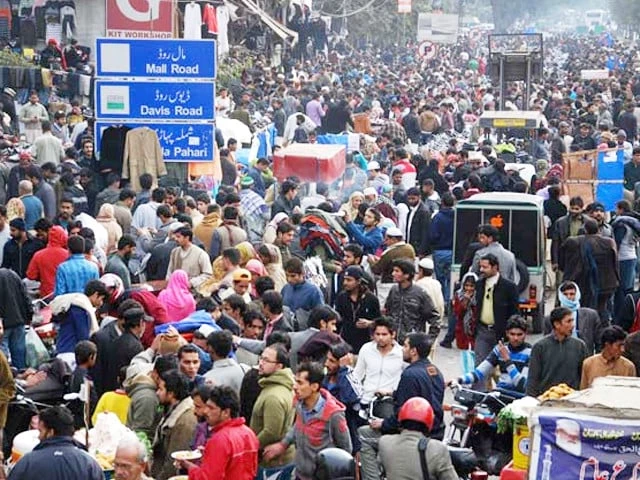
Pakistan could see its population rise to nearly 390 million by 2050, marking a 62% increase over the next 25 years, according to an official population projections report launched on Tuesday by Ahsan Iqbal.
The “Population Projections 2023-2050” report was prepared jointly by the Ministry of Planning Development and Special Initiatives and the United Nations Population Fund using data from the 2023 national census, which recorded Pakistan’s population at 241.9 million.
The report outlines three possible demographic scenarios based on fertility trends and contraceptive use. Under the slow fertility decline scenario, Pakistan’s population is projected to reach 390 million by 2050, adding around 148 million people.
Pakistan rejects report on Iranian aircraft at Nur Khan Airbase
Under a rapid fertility decline model, the population could reach approximately 371.9 million, while the evidence-based contraceptive use scenario estimates the figure at around 383.2 million.
The report highlights a major increase in the working-age population, which is projected to rise from 135.2 million to 255.4 million by 2050 — an 89% increase. Youth aged 15 to 29 years are expected to increase from 63 million to 100 million.
Experts warn that Pakistan’s current economic growth model may struggle to create sufficient employment opportunities for such a large workforce. The country currently requires sustainable annual growth of 6% to 8% to generate jobs, but economic expansion has averaged around 3.5% in recent years.
The report also noted that the elderly population aged 65 and above is expected to rise sharply from 8.6 million to 22.6 million by 2050, increasing the need for healthcare and social protection systems.
Among provinces, Punjab is expected to remain the most populous, growing from 128 million to 200 million by 2050, while Balochistan is projected to record the highest percentage increase.

PM directs early monsoon preparedness amid weather variability across Pakistan



US imposes visa curbs on India-linked firm over fentanyl pills






2 minutes ago

21 minutes ago
26 minutes ago

33 minutes ago

46 minutes ago

58 minutes ago
- At least 13 people were killed in a series of Israeli strikes in southern Lebanon on Tuesday, according to Lebanon’s…
- The United States has announced visa restrictions on 13 individuals linked to an India-based online pharmacy accused of trafficking counterfeit…
- Bangladesh is facing a growing public health challenge as severe shortages of contraceptives disrupt its long-standing family planning programme, raising…
 Delegations from China and the United States held trade discussions in South Korea on Wednesday, just hours before US President…

- A major shift in medical terminology has been announced for Polycystic Ovarian Syndrome (PCOS), a common hormonal disorder affecting millions…
- Health authorities are working to contain a potential international spread of hantavirus after new suspected cases emerged across multiple countries,…
 The Indus Hospital, located in Karachi’s Korangi area, has earned widespread recognition for providing free and quality healthcare services to…
- The Healthcare Devices Association of Pakistan (HDAP) has raised serious concerns over the continued presence of banned reusable syringes in…




- Prime Minister Shehbaz Sharif has directed authorities to make advance…2 minutes ago
- At least 13 people were killed in a series of…21 minutes ago
- Indian actor and producer Dileep Raj has passed away at…26 minutes ago
- The United States has announced visa restrictions on 13 individuals…33 minutes ago