


Bangladesh Holds Historic Election After Hasina’s 2024 Ouster
 Web Desk
|
21 hours ago
Web Desk
|
21 hours ago
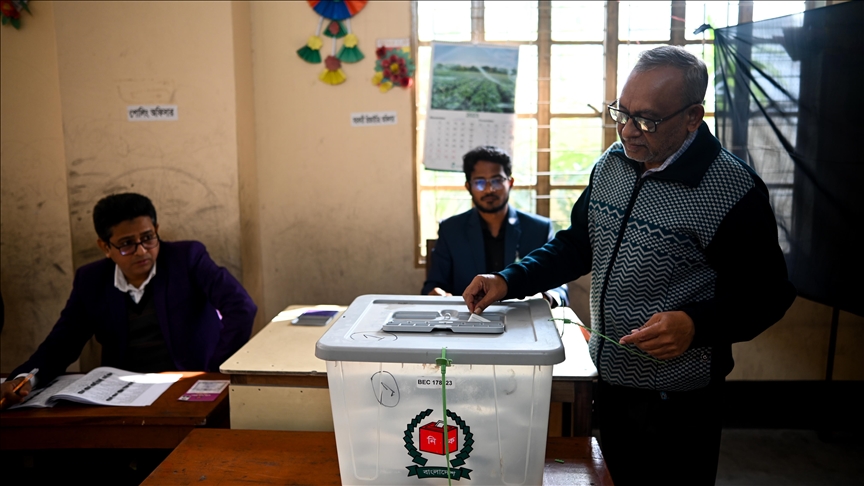
Bangladeshis lined up early Thursday to cast ballots in a historic election after former Premier Sheikh Hasina’s 2024 ouster. Millions are voting for 300 seats in the Jatiya Sangsad, or House of the Nation. Over 2,000 candidates, including independents, are contesting. Analysts say a decisive result is crucial for governance and stability after months of unrest.
The election follows the world’s first Gen Z‑led uprising, which toppled Hasina and disrupted industries, including the garment sector. Hasina’s Awami League remains banned, and she is in self-imposed exile in India. Experts note China may expand influence as ties with India weaken. Nobel laureate Muhammad Yunus called the election a constitutional expression of public awakening against inequality and injustice.
Two coalitions led by former allies contest the vote: the Bangladesh Nationalist Party (BNP) and Islamist Jamaat-e-Islami. Opinion polls give the BNP an edge. The prime ministerial candidates are BNP’s Tarique Rahman and Jamaat chief Shafiqur Rahman. Voter enthusiasm is high, particularly among first-time and young voters aged 18-35, who make up nearly half the electorate.
Read more : Voting Starts in Bangladesh National Elections and Referendum
Authorities deployed around 958,000 police, army, and paramilitary personnel nationwide to secure the election. Voting started at 7:30 a.m. local time and closes at 4:30 p.m. Counting begins immediately, with early results expected by midnight and final outcomes by Friday morning. Election observers emphasize the importance of a fair, peaceful, and transparent vote for democratic renewal.
Many citizens expressed excitement and determination to vote despite challenges. Some cannot afford travel or feel disillusioned because Hasina’s party is barred. Others, like Shakil Ahmed, vowed not to miss their chance. Women voters also participated actively, with some showing support for specific parties through symbols like henna designs. Overall, the election reflects a historic moment for Bangladesh’s young and engaged electorate.

2 hours ago
3 hours ago
4 hours ago
4 hours ago
6 hours ago
6 hours ago
- U.S. President Donald Trump has urged that Israeli Prime Minister Benjamin Netanyahu should be granted a pardon in his ongoing…
- Bangladesh has completed voting for its 13th national parliamentary elections, and vote counting is now underway across the country. The…
- U.S. President Donald Trump has warned Iran that failing to reach an agreement on its nuclear program could lead to…
 A female teacher died in southern Thailand after a gunman opened fire at her school in Hat Yai district. The…
 LAHORE: Punjab Health Minister Khawaja Salman Rafique said the Chief Minister’s Children’s Heart Surgery Programme is a landmark initiative. It…
 Pakistan on Tuesday called on Organization of Islamic Cooperation (OIC) member states to strengthen collaboration in vaccine manufacturing. State Minister…
 The Pakistan Pavilion was inaugurated at the World Health Exhibition (WHX) 2026 in Dubai. The event ran from February 9…
 ISLAMABAD – The first national polio immunization campaign of 2026 has entered its fifth day. Over 42.2 million children have…




- U.S. President Donald Trump has urged that Israeli Prime Minister…2 hours ago
- Bangladesh has completed voting for its 13th national parliamentary elections,…3 hours ago
- U.S. President Donald Trump has warned Iran that failing to…4 hours ago
- The bodies of three Pakistani nationals who died in Iran…4 hours ago