


Child labour affects over 8.6 million children in Pakistan
 Web Desk
|
2 hours ago
Web Desk
|
2 hours ago
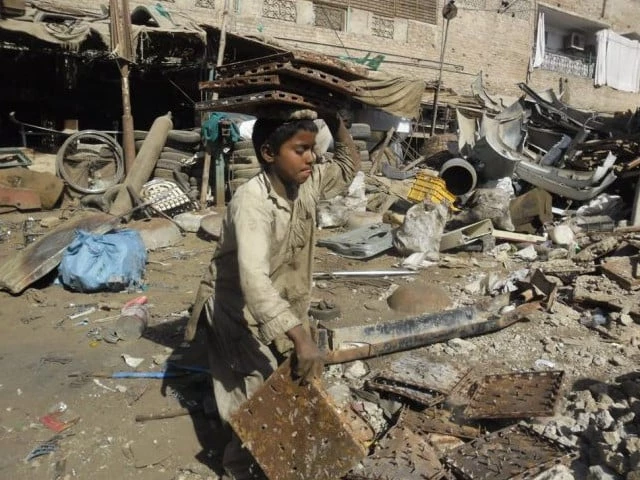
More than 8.6 million children in Pakistan are engaged in child labour, including over 6.6 million involved in hazardous work that threatens their health, safety and overall development, according to a new national report launched by the National Commission for Human Rights (NCHR) in collaboration with UNICEF.
The report, titled Pakistan: Child Labour Surveys, Evidence for Action, provides the country’s first nationally representative child labour dataset in nearly three decades. It offers a detailed assessment of the scale, distribution, sectors and underlying causes of child labour across Pakistan.
Speaking at the launch ceremony, NCHR Chairperson Rabiya Javeri Agha highlighted that Pakistan’s last comprehensive child labour survey was conducted in 1996. She noted that policymakers and development organizations had been relying on outdated information for more than 20 years, making it difficult to design effective interventions.
According to the report, Punjab bears the highest burden, with approximately 6 million children involved in labour. Sindh follows with around 1.6 million child labourers, while Khyber Pakhtunkhwa records 745,155 cases, Balochistan 201,352 and Islamabad Capital Territory 15,180.
The findings identify poverty as the primary factor driving child labour. Children from low-income households and families with limited educational backgrounds are significantly more vulnerable. The report also notes that boys are more likely than girls to engage in labour, particularly in hazardous occupations.
A large proportion of child labour occurs within family-run farms, workshops and homes, making it difficult for traditional labour inspection systems to detect and address the issue. The study further reveals serious consequences for children’s physical and mental wellbeing.
Working children are more likely to remain out of school, work long hours and suffer injuries, illness and exhaustion. Across different provinces, between 32 and 58 percent of child labourers reported work-related injuries or illnesses, while many older working children showed symptoms of depression.
Federal Human Rights Minister Azam Nazeer Tarar stressed that addressing child labour requires coordinated national efforts and a reassessment of policy priorities.

Two suspected drug suppliers linked to Anmol Pinky arrested in Karachi
Israeli strikes hit southern Lebanon, 16 reported dead

Naumaan Ijaz responds to criticism over showbiz earnings

Imad Irfani’s new look sparks comparisons with Imran Khan

Trump-Iran deal sparks comparisons with Obama-era nuclear accord



15 minutes ago

23 minutes ago
42 minutes ago
50 minutes ago
1 hour ago
1 hour ago
- The title of the world’s most beautiful airport has been awarded to China’s Guangzhou Baiyun International Airport Terminal 3. According…
- US Vice President JD Vance has said that the agreement reached with Iran could play a significant role in promoting…
- US President Donald Trump has said that the United States is committed to peace and expects a complete ceasefire across…
- Ukraine carried out a large-scale drone attack on the Russian capital Moscow on Thursday, reportedly launching hundreds of drones and…




 Karachi is witnessing a worrying surge in congenital heart diseases among newborns, with medical experts warning that thousands of children…
 Pakistan now has the highest diabetes rate in the world, according to the latest IDF report. The report shows that…
 South Africa, Eswatini, and Zambia have begun administering lenacapavir, a groundbreaking HIV-prevention injection, marking a major milestone in the fight…
- KARACHI: The Sindh High Court’s Constitutional Bench was informed on Monday that all milk samples collected in Karachi are harmful…





- Police in Karachi have claimed to have arrested two…15 minutes ago
- At least 16 people were reported killed after Israeli…23 minutes ago
- Veteran Pakistani actor Naumaan Ijaz has responded to a…42 minutes ago
- Pakistani actor Imad Irfani has become the center of attention…50 minutes ago