


‘Not our war’: Germany, France say no to Trump
 Web Desk
|
15 hours ago
Web Desk
|
15 hours ago
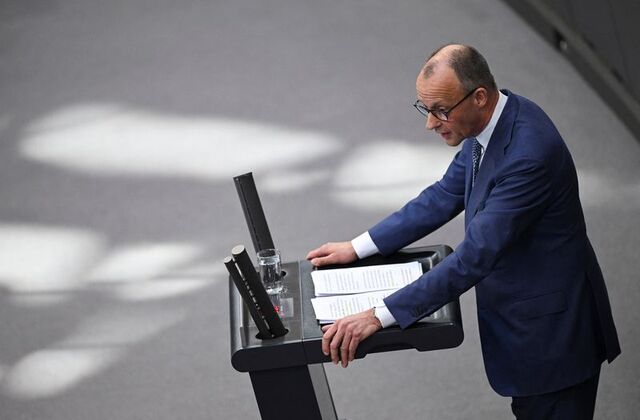
BERLIN/PARIS – German Chancellor Friedrich Merz sharply rejected U.S. calls to join military operations against Iran. He expressed doubts about the rationale behind the U.S.-Israeli war. Merz told lawmakers that Washington provided no convincing plan or request for European assistance.
Merz emphasized that Germany would not participate in military actions to secure the Strait of Hormuz. He stressed that Iran should not threaten its neighbors. His Defence Minister, Boris Pistorius, also stated, “This is not our war; we have not started it.”
France echoed Germany’s position. President Emmanuel Macron said France is not a party to the conflict. European leaders broadly rejected direct involvement, wary of unpredictable consequences and domestic opposition.
European governments are balancing Transatlantic ties and domestic opinion. Polls show 58% of Germans and 68% of Spaniards oppose the war. Leaders calculate the risks of joining outweigh benefits. They also fear being dragged into an undefined conflict.
Read more : German Embassy Staff Temporarily Pulled Out Amid Iraq Tensions
UK Prime Minister Keir Starmer focused on reopening the Strait of Hormuz without direct U.S. involvement. France is assembling a coalition with European, Asian, and Gulf states to escort ships. The effort involves discussions with insurers, maritime authorities, and technical experts.
European leaders also criticized U.S. unpredictability. Merz and others objected to Washington loosening oil sanctions on Russia without consultation. Officials noted U.S. and Israeli war aims differ and remain unclear, including potential regime change objectives.
Ultimately, Europe seeks unity and calm in managing the crisis. EU foreign policy chief Kaja Kallas said the bloc remains focused despite unpredictable U.S. actions. Leaders continue political and technical preparations to secure regional trade while avoiding direct war involvement.







9 minutes ago
15 minutes ago
22 minutes ago
3 hours ago
3 hours ago
5 hours ago
- The Shawwal moon has not been sighted in India, and Muslims across the country will celebrate Eid ul-Fitr on March…
- Iran is considering imposing transit fees on ships passing through the strategic Strait of Hormuz, raising concerns about potential impacts…
- The Shawwal moon has not been sighted in Malaysia and Bangladesh, leading authorities in both countries to announce Eid ul-Fitr…
 BERLIN/PARIS – German Chancellor Friedrich Merz sharply rejected U.S. calls to join military operations against Iran. He expressed doubts about…
 A measles outbreak has been reported in Kasur district, Punjab, affecting several children in a local village. Rescue sources confirmed…
 ISLAMABAD – Pakistan’s National Emergency Operations Center (NEOC) confirmed the country’s first wild polio case of 2026 on Thursday. The…
 LAHORE – The Punjab government on Sunday ordered all public sector hospitals to remain on emergency alert. Authorities directed hospitals…
 A mysterious illness has claimed four lives in Atta Muhammad Khosa village, Kashmore, Sindh, officials and locals said. The disease…



- The Central Ruet-e-Hilal Committee has announced that the Shawwal moon…9 minutes ago
- Sindh Chief Minister Murad Ali Shah has announced a 90-day…15 minutes ago
- The government held an important meeting in Islamabad as the…22 minutes ago
- In a significant diplomatic development, Prime Minister Shehbaz Sharif and…3 hours ago