


Oil Prices Surge After Iran Strikes Middle East Energy Facilities
 Web Desk
|
15 hours ago
Web Desk
|
15 hours ago

BEIJING – Oil prices jumped sharply after Iran attacked several energy facilities across the Middle East. The strikes followed a U.S.-Israeli attack on Iran’s South Pars gas field. The escalation has intensified regional tensions and disrupted energy markets.
Brent crude rose $3.69, or 3.44%, reaching $111.07 per barrel. U.S. West Texas Intermediate (WTI) crude increased $2.29, or 2.38%, to $98.61 per barrel. Brent had already closed up 3.8% on Wednesday, while WTI settled nearly flat.
The WTI-Brent discount is the widest in 11 years. U.S. strategic reserve releases and higher freight costs contributed to WTI’s relative weakness. Renewed attacks on Middle Eastern energy facilities provided stronger support to Brent prices.
QatarEnergy reported extensive damage to its Ras Laffan LNG hub after Iranian missile attacks. The facility is a key site for Qatar’s liquefied natural gas operations. The attacks have raised concerns about global energy supply and security.
Read more : Gold prices remain steady in Pakistan
The UAE also suspended some energy operations. Falling debris from intercepted missiles affected the Habshan gas facilities and the Bab oil field. Saudi Arabia intercepted and destroyed four ballistic missiles targeting Riyadh, along with a drone attack on a gas facility.
Iran had issued evacuation warnings for several energy facilities in Saudi Arabia, the UAE, and Qatar. The attacks were retaliation for strikes on Iran’s South Pars and Asaluyeh energy sites. South Pars is part of the world’s largest natural gas field, shared with Qatar.
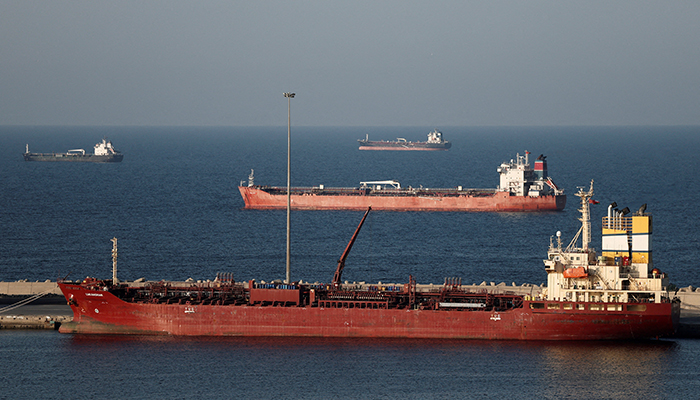
Analysts predict oil prices will remain supported amid regional instability. U.S. sources report that the Trump administration is considering deploying thousands of troops to secure the Strait of Hormuz. This could involve naval and air operations to protect oil tankers from further attacks.







53 minutes ago
60 minutes ago
1 hour ago
4 hours ago
4 hours ago
6 hours ago
- The Shawwal moon has not been sighted in India, and Muslims across the country will celebrate Eid ul-Fitr on March…
- Iran is considering imposing transit fees on ships passing through the strategic Strait of Hormuz, raising concerns about potential impacts…
- The Shawwal moon has not been sighted in Malaysia and Bangladesh, leading authorities in both countries to announce Eid ul-Fitr…
 BERLIN/PARIS – German Chancellor Friedrich Merz sharply rejected U.S. calls to join military operations against Iran. He expressed doubts about…

 A measles outbreak has been reported in Kasur district, Punjab, affecting several children in a local village. Rescue sources confirmed…
 ISLAMABAD – Pakistan’s National Emergency Operations Center (NEOC) confirmed the country’s first wild polio case of 2026 on Thursday. The…
 LAHORE – The Punjab government on Sunday ordered all public sector hospitals to remain on emergency alert. Authorities directed hospitals…
 A mysterious illness has claimed four lives in Atta Muhammad Khosa village, Kashmore, Sindh, officials and locals said. The disease…



- The Central Ruet-e-Hilal Committee has announced that the Shawwal moon…53 minutes ago
- Sindh Chief Minister Murad Ali Shah has announced a 90-day…60 minutes ago
- The government held an important meeting in Islamabad as the…1 hour ago
- In a significant diplomatic development, Prime Minister Shehbaz Sharif and…4 hours ago