


Russia and Ukraine agree to three-day ceasefire and prisoner swap
 Rabbia Zafar
|
5 days ago
Rabbia Zafar
|
5 days ago
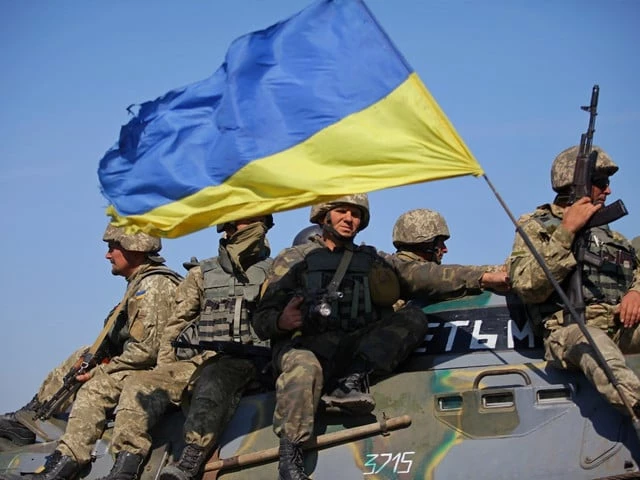
Russia and Ukraine have agreed to a three-day ceasefire brokered with US involvement, alongside a large prisoner exchange, according to statements from both countries and US President Donald Trump.
The ceasefire, set to run from May 9 to May 11, includes a temporary suspension of military operations and a mutual exchange of 1,000 prisoners of war from each side. Trump announced the development on his social media platform, saying the agreement was part of ongoing efforts to end the prolonged conflict.
He said the request was made directly by him and welcomed what he described as cooperation from Russian President Vladimir Putin and Ukrainian President Volodymyr Zelenskiy. Trump added that diplomatic efforts were continuing and expressed hope that the agreement could mark “the beginning of the end” of the war.
President Zelenskiy confirmed the arrangement, stating that the ceasefire and prisoner exchange were achieved through US-mediated negotiations. He emphasised that humanitarian issues remain a priority for Ukraine and described the agreement as part of broader diplomatic efforts.
Karachi traffic police draw attention over factory parking e-challans
The Kremlin also confirmed participation in the ceasefire initiative, with officials stating that it was agreed during discussions with the US administration. However, both Moscow and Kyiv have accused each other of previous ceasefire violations during the week.
Despite the temporary truce, fighting has continued in various regions, with reports of drone and missile strikes exchanged between the two sides. Russia said it intercepted hundreds of Ukrainian drones, while Ukraine reported ongoing attacks on its territory.
The ceasefire coincides with Russia’s Victory Day commemorations on May 9, marking the Soviet Union’s role in defeating Nazi Germany in World War II. Earlier unilateral ceasefire declarations by Russia were rejected by Ukraine, which instead called for a longer-term truce.
Peace negotiations between the two countries remain stalled, with deep disagreements over territorial control and post-war settlement terms.



48 minutes ago
2 hours ago
2 hours ago
6 hours ago
8 hours ago
8 hours ago
- Former U.S. President Barack Obama openly criticized President Donald Trump over his handling of Iran-related tensions. Obama stated that during…
- Russia launched large-scale drone attacks on Ukraine immediately after the three-day ceasefire between the two countries ended. Ukrainian officials claimed…
 Indian Prime Minister Narendra Modi has reportedly reduced the size of his official motorcade as part of fuel-saving measures amid…
 Russian President Vladimir Putin has welcomed the latest test launch of the country’s strategic nuclear missile Sarmat, calling it “the…

 A major shift in medical terminology has been announced for Polycystic Ovarian Syndrome (PCOS), a common hormonal disorder affecting millions…
 Health authorities are working to contain a potential international spread of hantavirus after new suspected cases emerged across multiple countries,…
 The Indus Hospital, located in Karachi’s Korangi area, has earned widespread recognition for providing free and quality healthcare services to…
 The Healthcare Devices Association of Pakistan (HDAP) has raised serious concerns over the continued presence of banned reusable syringes in…





- Former U.S. President Barack Obama openly criticized President Donald Trump…48 minutes ago
- Russia launched large-scale drone attacks on Ukraine immediately after the…2 hours ago
- Residents across different parts of Karachi are facing severe difficulties…2 hours ago
- Security forces conducted a major clearance Barkhan operation against militants…6 hours ago