


Oil prices rise as Trump warns Iran over patience
 Rabbia Zafar
|
2 hours ago
Rabbia Zafar
|
2 hours ago
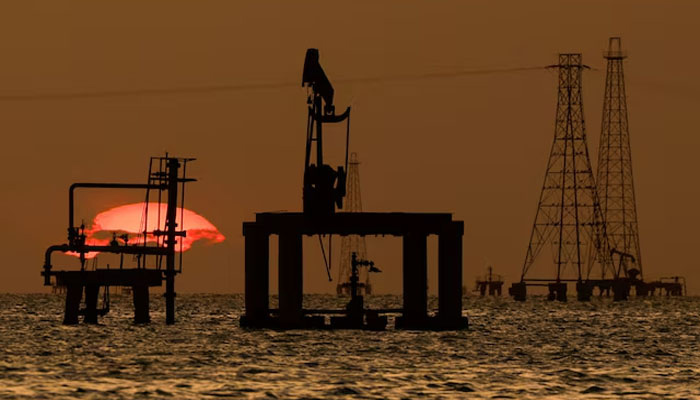
Global oil prices rose more than 1% on Friday after remarks by United States President Donald Trump signalled growing impatience with Iran amid ongoing tensions surrounding the Strait of Hormuz, a critical global shipping route.
Brent crude futures climbed $1.32, or 1.25%, to $107.04 per barrel, while US West Texas Intermediate (WTI) rose $1.33, or 1.31%, to $102.50. Both benchmarks also recorded strong weekly gains, with Brent up nearly 6% and WTI rising more than 7%, reflecting heightened market uncertainty.
Trump said in a televised interview that he would not remain “much more patient” with Iran and urged Tehran to reach a deal, reinforcing concerns that geopolitical tensions in the region remain unresolved despite reports of a fragile ceasefire.
Market sentiment was further influenced by ongoing disruptions in the Strait of Hormuz, where shipping activity remains volatile. Iran has claimed that dozens of vessels have passed through the waterway in recent days, though levels remain significantly below normal pre-conflict traffic.
Energy analysts said the lack of a breakthrough in diplomatic talks, including discussions involving China during high-level meetings in Beijing, has pushed markets back toward risk pricing based on supply uncertainty.
US Trade Representative Jamieson Greer noted that China views stable access to the Strait of Hormuz as essential, highlighting the global stakes tied to the region’s security. Meanwhile, reports of vessel seizures and maritime incidents have added to concerns over shipping safety.
Market experts say the primary driver of current oil price movements remains tight supply conditions, with geopolitical risks acting as a major catalyst for volatility. While some easing in shipping flows has been observed, analysts caution that the situation remains unstable and sensitive to political developments.
The outlook for energy markets is expected to remain uncertain as traders closely watch diplomatic efforts and potential escalation risks in the region.
Seven suspects arrested in JUI ex-MP Maulana Idris murder case

North Korea rejects UK sanctions on children’s camp over Ukraine claims
President Zardari confers 47 military awards at Aiwan-e-Sadr ceremony
Pakistan-US ties strengthened during Trump era, says Mohsin Naqvi
LESCO uncovers remote-control electricity theft network in Lahore
Shehbaz Sharif highlights Pakistan-China digital economy cooperation

36 minutes ago

46 minutes ago

51 minutes ago

1 hour ago

1 hour ago

1 hour ago
- North Korea has strongly criticised Britain for imposing sanctions on one of its children’s facilities, accusing London of attempting to…
- Fighting between Russia and Ukraine intensified sharply after a brief three-day ceasefire expired, with both sides launching renewed attacks that…
- A political effort in the United States Congress to advance a resolution aimed at ending involvement in the Iran conflict…
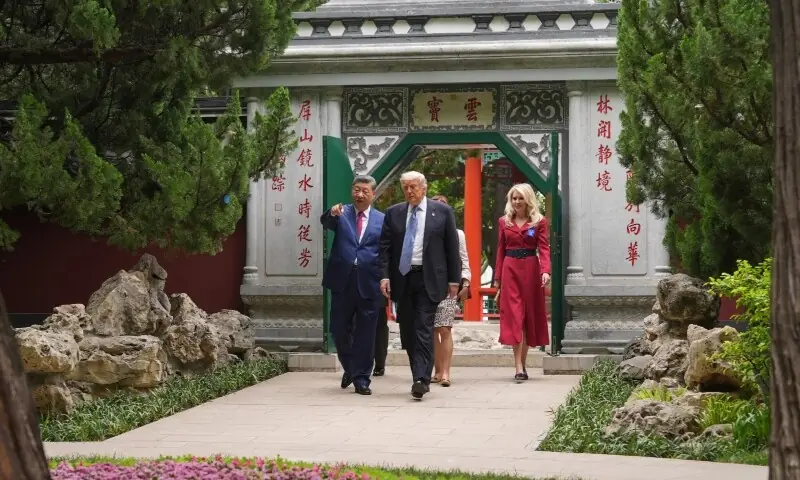
- United States President Donald Trump said he secured “fantastic trade deals” with Chinese leader Xi Jinping during their high-profile summit…
 A major shift in medical terminology has been announced for Polycystic Ovarian Syndrome (PCOS), a common hormonal disorder affecting millions…
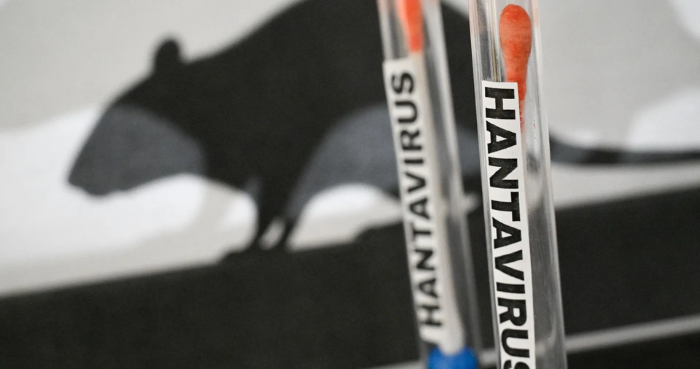
- Health authorities are working to contain a potential international spread of hantavirus after new suspected cases emerged across multiple countries,…
 The Indus Hospital, located in Karachi’s Korangi area, has earned widespread recognition for providing free and quality healthcare services to…
- The Healthcare Devices Association of Pakistan (HDAP) has raised serious concerns over the continued presence of banned reusable syringes in…



- Significant progress has been made in the investigation into the…36 minutes ago
- North Korea has strongly criticised Britain for imposing sanctions on…46 minutes ago
- President Asif Ali Zardari on Thursday conferred 47 military awards…51 minutes ago
- Fighting between Russia and Ukraine intensified sharply after a brief…1 hour ago