


Pakistan urged to move beyond economic stabilisation policies
 Rabbia Zafar
|
3 hours ago
Rabbia Zafar
|
3 hours ago
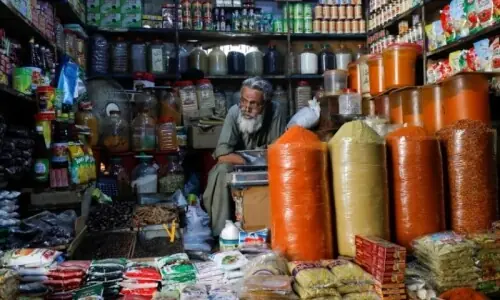
Prime Minister Shehbaz Sharif’s recent remarks acknowledging the economic impact of the US-Iran conflict on Pakistan have renewed debate over the country’s long-standing focus on “economic stabilisation” policies.
Economic experts argue that while stabilisation measures may temporarily protect the economy from immediate crises such as balance-of-payments pressures, currency volatility, and declining foreign reserves, they are not a long-term solution for sustainable growth.
In recent years, Pakistan has repeatedly adopted austerity-driven stabilisation programmes aimed at controlling inflation, reducing imports, and meeting fiscal targets. However, critics say these measures have also slowed industrial activity, weakened consumer purchasing power, and reduced business confidence.
Hadiqa Kiani Awarded Sitara-i-Imtiaz For Contributions To Music
Analysts note that economic growth has remained sluggish despite repeated claims of stabilisation. Many businesses have downsized operations, investment activity has weakened, and unemployment and economic insecurity have increased. Foreign investors have also remained cautious due to concerns over policy inconsistency, weak domestic demand, and uncertainty in the broader economic environment.
Experts stress that genuine economic stability can only be achieved through structural reforms rather than temporary fiscal tightening alone. Key areas identified for reform include tax administration, export competitiveness, governance, industrial modernisation, productivity enhancement, and investment in education and human capital.
They argue that countries that successfully stabilised their economies used adjustment periods to strengthen institutions, diversify exports, and improve industrial competitiveness instead of relying solely on demand suppression and import restrictions.
Pakistan’s economy continues to face recurring challenges whenever growth attempts accelerate, including external account pressures, low export earnings, and dependence on imported energy and commodities. Economists warn that without deeper reforms, the country risks remaining trapped in repeated cycles of crisis management.
The recent Middle East conflict and rising energy prices have once again exposed the vulnerability of Pakistan’s economy to external shocks. Observers say the government must now focus on creating jobs, attracting investment, and expanding productive capacity rather than treating stabilisation as an achievement in itself.
Trump’s Iran strategy stalls as rhetoric and reality collide

Sanam Saeed, Roma Riaz to represent Pakistan at Cannes Film Festival
Court reserves verdict on physical remand of drug suspect Anmol alias Pinky in Karachi

Parliament clashes over Imran Khan access as opposition threatens protests
Stakeholders urge tax cut on lithium batteries to boost renewable energy in Pakistan
Pakistan pushes textile exports, APBUMA plans global expansion at US exhibition

Gold prices in Pakistan drop sharply amid global selloff and strong US dollar
Second LNG cargo from Qatar arrives in Pakistan within three days

39 seconds ago
4 minutes ago
28 minutes ago
33 minutes ago

51 minutes ago

57 minutes ago
- US President Donald Trump’s confrontational diplomatic style, which has delivered results in some global disputes, appears to be faltering in…
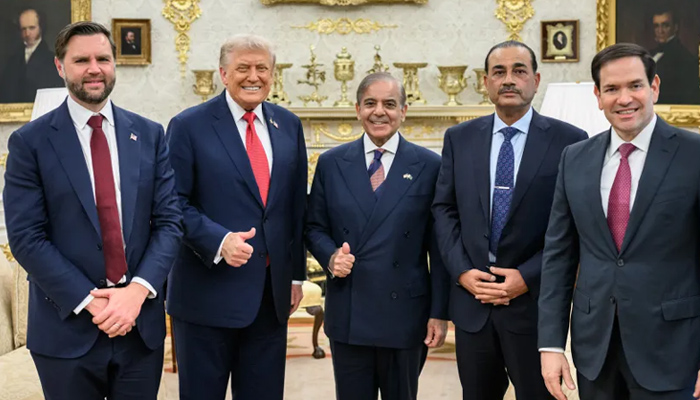
- Donald Trump has claimed that a “decisive attack” on Iran was halted following requests from “very good people” in Pakistan…
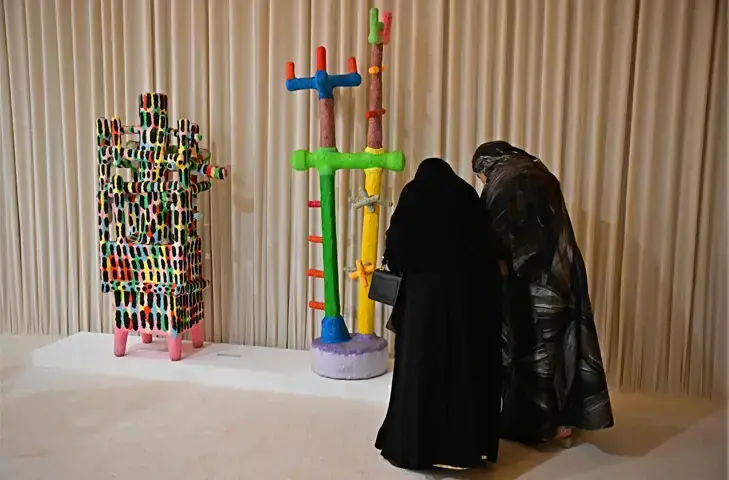
 The Middle East’s largest annual contemporary art fair, Art Dubai, opened in Dubai on Friday under the shadow of the…
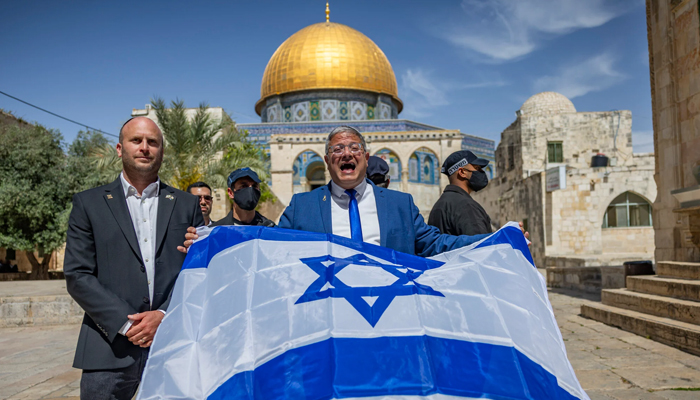
- Itamar Ben-Gvir led thousands of Israelis into the compound of Al-Aqsa Mosque, where he reportedly engaged in a highly provocative…
 A major shift in medical terminology has been announced for Polycystic Ovarian Syndrome (PCOS), a common hormonal disorder affecting millions…
 Health authorities are working to contain a potential international spread of hantavirus after new suspected cases emerged across multiple countries,…
 The Indus Hospital, located in Karachi’s Korangi area, has earned widespread recognition for providing free and quality healthcare services to…
 The Healthcare Devices Association of Pakistan (HDAP) has raised serious concerns over the continued presence of banned reusable syringes in…



- US President Donald Trump’s confrontational diplomatic style, which has delivered…39 seconds ago
- Pakistani actress Sanam Saeed and model Roma Riaz will represent…4 minutes ago
- A judicial magistrate’s court in Karachi on Friday reserved its…28 minutes ago
- Debate over access to jailed Pakistan Tehreek-e-Insaf (PTI) founder Pakistan…33 minutes ago