


Stakeholders urge tax cut on lithium batteries to boost renewable energy in Pakistan
 Rabbia Zafar
|
1 hour ago
Rabbia Zafar
|
1 hour ago
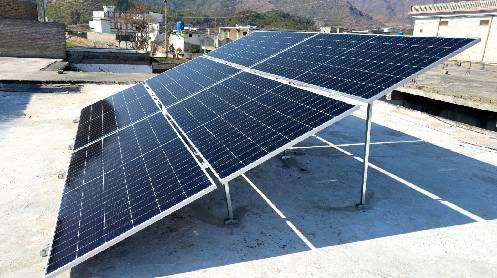
enewable energy stakeholders in Pakistan have called on the Engineering Development Board to reduce taxes on lithium battery cells, arguing that high duties are slowing down domestic production and hindering the country’s transition toward clean energy.
According to a statement issued on Friday, Pakistan Renewable Energy Development Forum Chairman Irfan Allahawala said lithium battery cells are currently taxed at around 50%, making local battery assembly less viable and discouraging investment in the sector. He warned that elevated costs are creating a significant barrier for renewable energy adoption across the country.
Allahawala stressed the need for a “level playing field” to attract investors and promote local manufacturing of energy storage systems. He added that reducing taxes on battery components would help lower overall system costs and encourage wider adoption of solar and other renewable energy solutions.
HEC appoints NUST rector as national chair for AI and robotics
He highlighted that Pakistan imported approximately 26,000 megawatts (MW) worth of solar panels between 2022 and 2024, all of which require compatible battery storage systems for efficient use. During the same period, lithium-ion battery imports reached 1.25 gigawatt-hours (GWh) in 2024 and are projected to rise to between 2.5 and 3 GWh in 2025.
Stakeholders argue that high import duties not only increase system costs but also discourage the development of a local value chain for renewable energy storage. They believe that policy support could significantly reduce dependence on imported petroleum products and help lower the country’s import bill.
Industry experts further suggest that a shift toward affordable battery storage is essential for stabilising Pakistan’s energy mix, especially as solar energy adoption continues to grow rapidly in both urban and rural areas.
The appeal reflects broader concerns within the renewable energy sector about policy consistency and the need for incentives to accelerate the country’s transition toward sustainable and cost-effective energy sources.
US claims China is distancing from Iran after Trump Beijing visit
Pakistan, Egypt agree to boost security cooperation and counter-terrorism ties
Trump’s Iran strategy stalls as rhetoric and reality collide

Sanam Saeed, Roma Riaz to represent Pakistan at Cannes Film Festival
Court reserves verdict on physical remand of drug suspect Anmol alias Pinky in Karachi

Parliament clashes over Imran Khan access as opposition threatens protests
Stakeholders urge tax cut on lithium batteries to boost renewable energy in Pakistan
Pakistan pushes textile exports, APBUMA plans global expansion at US exhibition


4 seconds ago

12 minutes ago
20 minutes ago
23 minutes ago
48 minutes ago
53 minutes ago
- US President Donald Trump’s confrontational diplomatic style, which has delivered results in some global disputes, appears to be faltering in…
- Donald Trump has claimed that a “decisive attack” on Iran was halted following requests from “very good people” in Pakistan…
 The Middle East’s largest annual contemporary art fair, Art Dubai, opened in Dubai on Friday under the shadow of the…
- Itamar Ben-Gvir led thousands of Israelis into the compound of Al-Aqsa Mosque, where he reportedly engaged in a highly provocative…
 A major shift in medical terminology has been announced for Polycystic Ovarian Syndrome (PCOS), a common hormonal disorder affecting millions…
 Health authorities are working to contain a potential international spread of hantavirus after new suspected cases emerged across multiple countries,…
 The Indus Hospital, located in Karachi’s Korangi area, has earned widespread recognition for providing free and quality healthcare services to…
 The Healthcare Devices Association of Pakistan (HDAP) has raised serious concerns over the continued presence of banned reusable syringes in…


- The United States has claimed at the United Nations that…4 seconds ago
- Interior Minister Mohsin Naqvi on Saturday met a high-level delegation…12 minutes ago
- US President Donald Trump’s confrontational diplomatic style, which has delivered…20 minutes ago
- Pakistani actress Sanam Saeed and model Roma Riaz will represent…23 minutes ago