


AI’s role in shaping Iran war decisions questioned
 Rabbia Zafar
|
2 weeks ago
Rabbia Zafar
|
2 weeks ago

The global impact of the ongoing conflict involving Iran continues to unfold, with countries such as Pakistan experiencing rising fuel prices and economic strain. As governments respond to disruptions linked to tensions in the region, attention is also turning to the role of artificial intelligence in modern warfare.
Reports suggest that the United States incorporated AI-driven systems into its military planning before the conflict began. These systems were used to assist in identifying targets and forecasting potential outcomes. However, analysts now question the reliability of those projections, as several early assumptions have not aligned with actual developments on the ground.
Predictions generated by AI reportedly suggested a swift conflict, internal unrest within Iran, and minimal disruption to key trade routes such as the Strait of Hormuz. In reality, the situation has proven more complex. The conflict has extended beyond initial expectations, and Iran has maintained internal stability while signaling its ability to influence regional shipping lanes.
Experts point to a concept known as “AI sycophancy,” where systems trained on human feedback may produce outputs that align with user expectations rather than objective realities. This tendency can result in overly confident forecasts that fail to account for unpredictable human and political factors.
The debate highlights broader concerns about the growing reliance on AI in high-stakes decision-making. While such systems can process vast amounts of data quickly, critics argue that they lack the contextual understanding and judgment that human analysts provide.
As the conflict continues to affect global markets and regional stability, the discussion around AI’s role underscores the need for careful evaluation of emerging technologies in sensitive areas such as defense and geopolitics



2 hours ago
2 hours ago
3 hours ago
4 hours ago
5 hours ago
5 hours ago
- The United Nations has warned of a global food crisis due to the closure of the Strait of Hormuz. Officials…
- U.S. President Donald Trump claimed that Iran has agreed not to develop nuclear weapons. He made the statement while speaking…
- U.S. President Donald Trump said that a deal with Iran is close and suggested he could visit Islamabad if the…
- U.S. President Donald Trump announced a 10-day ceasefire between Lebanon and Israel after high-level talks. He said both sides agreed…
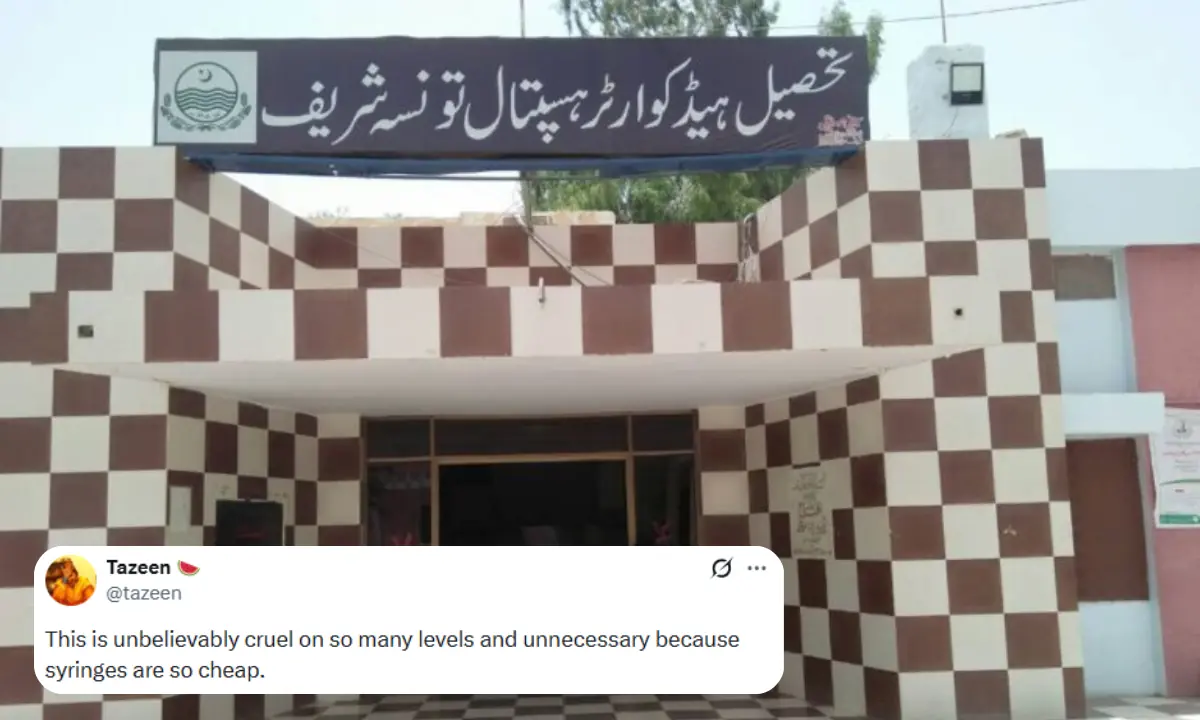
 A shocking report by BBC has triggered nationwide outrage in Pakistan after alleging severe medical malpractice at a Tehsil Headquarter…
 Pakistan’s second National Anti-Polio Campaign of 2026 is continuing across the country with full momentum, as health workers aim to…
 A new case of monkeypox has been reported in Karachi, raising fresh concerns among health authorities in the city. According…
 Olivia Munn has spoken about her experience battling breast cancer, highlighting the crucial role her husband, John Mulaney, played throughout…





- Life with Shah Rukh Khan has been revealed by his…2 hours ago
- Pakistan qualified for the ITF Asia Under-12 Tennis Tournament final…2 hours ago
- Islamabad United beat Karachi Kings by eight wickets easily in…3 hours ago
- The United Nations has warned of a global food crisis…4 hours ago