


Pakistan’s electric bike shift could solve fuel crisis for millions
 Rabbia Zafar
|
4 weeks ago
Rabbia Zafar
|
4 weeks ago
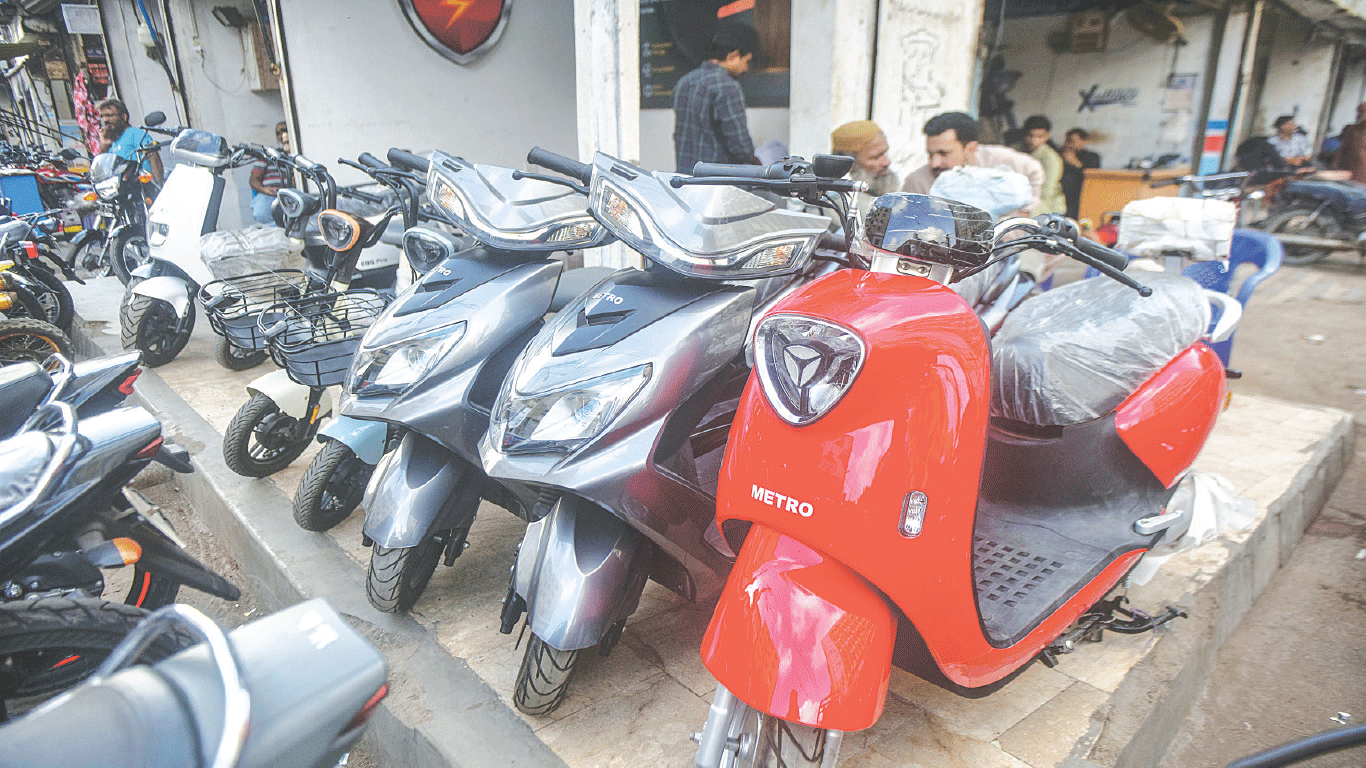
A Karachi-based delivery rider, Amjad, represents a growing economic strain faced by millions of motorcycle users across Pakistan as rising fuel prices continue to erode already thin earnings. For six years, he has relied on a rented petrol bike to deliver food across the city. With recent oil price spikes in March 2026, his weekly fuel costs have surged sharply, leaving him with daily earnings that can fall below Rs500 after expenses.
Despite these challenges, electric motorcycles offer a compelling economic alternative. Operating costs for an electric bike are dramatically lower—around Rs40 per trip in electricity compared to more than Rs300 in petrol for a similar distance. Analysts estimate annual savings of nearly Rs70,000 per vehicle, allowing recovery of higher upfront costs within two years.
Pakistan currently has over 30 million motorcycles, consuming more than 3 million tonnes of petrol annually, costing the country approximately $2.5 billion in imports. Experts argue that shifting even a portion of this fleet to electric could significantly reduce fuel dependency and ease pressure on foreign exchange reserves.
Electric vehicle sales surge in Southeast Asia amid oil price spike
However, the biggest barrier remains affordability. Many riders like Amjad lack savings, credit access, or government support to purchase electric vehicles despite clear long-term savings.
International examples show potential solutions. Countries such as Vietnam and Indonesia have successfully expanded electric two-wheeler through subsidies, tax exemptions, and battery-swapping networks. These systems eliminate charging concerns by allowing riders to exchange depleted batteries in under two minutes at low-cost stations.
Pakistan’s underutilised electricity capacity, particularly during off-peak hours, could also support large-scale charging without straining the grid. Experts suggest that converting just 5 million motorcycles to electric by 2028 would require less than 1% of national electricity consumption.
Policy proposals include fleet conversion incentives, scrap page schemes for old bikes, and standardised battery systems to support private-sector swap networks. Advocates argue these measures could cut fuel imports, stabilise rider incomes, and improve the country’s economic resilience.



2 hours ago
2 hours ago
2 hours ago
2 hours ago
2 hours ago
7 hours ago
- U.S. Secretary of State Marco Rubio reportedly entered China alongside President Donald Trump despite an existing Chinese ban against him.…
- U.S. President Donald Trump said Chinese President Xi Jinping offered assistance in keeping the Strait of Hormuz open. During a…
- A British newspaper has claimed that Saudi Arabia has proposed a non-aggression pact between Iran and Middle Eastern countries. According…
 Dozens of Israeli settlers entered the Al-Aqsa Mosque compound in occupied East Jerusalem on Thursday under the protection of Israeli…
 A major shift in medical terminology has been announced for Polycystic Ovarian Syndrome (PCOS), a common hormonal disorder affecting millions…
 Health authorities are working to contain a potential international spread of hantavirus after new suspected cases emerged across multiple countries,…
 The Indus Hospital, located in Karachi’s Korangi area, has earned widespread recognition for providing free and quality healthcare services to…
 The Healthcare Devices Association of Pakistan (HDAP) has raised serious concerns over the continued presence of banned reusable syringes in…



- U.S. Secretary of State Marco Rubio reportedly entered China alongside…2 hours ago
- U.S. President Donald Trump said Chinese President Xi Jinping offered…2 hours ago
- A British newspaper has claimed that Saudi Arabia has proposed…2 hours ago
- A serious case of medical negligence has surfaced in Faisalabad,…2 hours ago