


Pakistan urged to adopt structural tax and growth reforms in FY27 budget
 Rabbia Zafar
|
12 minutes ago
Rabbia Zafar
|
12 minutes ago
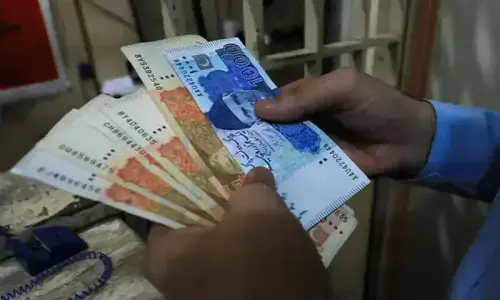
As preparations begin for Pakistan’s federal budget for fiscal year 2026–27, economists and policy analysts are calling for deep structural reforms to shift the country away from short-term fiscal fixes toward sustainable, long-term economic growth.
The upcoming budget is being described as a critical transition point, with Pakistan expected to exit its current International Monetary Fund (IMF) Extended Fund Facility in late 2027. Experts argue that the government must now move beyond routine tax adjustments and austerity-driven measures that have dominated recent budgets.
For years, Pakistan’s fiscal framework has relied heavily on indirect taxes and withholding mechanisms that place a disproportionate burden on existing taxpayers, while leaving large parts of the informal economy under-taxed. Analysts say this has contributed to a persistently low tax-to-GDP ratio and limited fiscal space for development spending.
Javier Bardem criticises world leaders over ‘toxic masculinity’
A key recommendation is the creation of a unified national tax coordination system to streamline federal and provincial taxation processes. Such a reform would aim to reduce administrative complexity, improve compliance, and lower the cost of doing business.
Reform advocates also highlight the need to modernise agricultural taxation by shifting from acreage-based assessments to income-based taxation, while protecting small subsistence farmers. Similarly, they propose progressive taxation on speculative urban land holdings to discourage unproductive investment.
On the industrial side, experts stress the importance of reducing energy costs and borrowing rates to make Pakistani exports globally competitive. They argue that exporters should be shielded from excessive advance taxes and delays in refunds, which currently weaken industrial productivity.
Improving the ease of doing business is also seen as essential, with proposals for a digital “single window” system to integrate permits, licences and regulatory approvals.
Finally, analysts emphasise that expenditure reforms and performance-based governance must accompany revenue measures, ensuring that public spending is tied to measurable outcomes. A broader post-IMF economic roadmap is also being urged to support long-term planning beyond fiscal stabilisation.

Court rules in Pakistan’s favour in Indus Waters Treaty arbitration case
PSX opens week on bearish note as index drops over 1,000 points
Pakistan urged to adopt structural tax and growth reforms in FY27 budget

LHC converts death sentence into life term in Jhang councillor murder case

Javier Bardem criticises world leaders over ‘toxic masculinity’

Michael Vaughan criticises ECB over Jofra Archer’s IPL availability

Three killed in remote-controlled blast near Wana Rustom Bazaar
Trump weighs Iran military options amid rising domestic political backlash


2 minutes ago

7 minutes ago

12 minutes ago

19 minutes ago

26 minutes ago
31 minutes ago
- Spanish actor Javier Bardem has criticised world leaders, including US President Donald Trump, Russian President Vladimir Putin, and Israeli Prime…
- US President Donald Trump has placed military options against Iran back under consideration as diplomatic talks stall and political divisions…
- Global oil prices extended their upward momentum on Monday as escalating tensions between the United States and Iran, along with…
 China has pledged to purchase at least $17 billion worth of US agricultural products between 2026 and 2028, according to…


- Health experts have warned that high blood pressure, also known as hypertension, has become a major public health challenge in…
 A major shift in medical terminology has been announced for Polycystic Ovarian Syndrome (PCOS), a common hormonal disorder affecting millions…
 Health authorities are working to contain a potential international spread of hantavirus after new suspected cases emerged across multiple countries,…
 The Indus Hospital, located in Karachi’s Korangi area, has earned widespread recognition for providing free and quality healthcare services to…




- Pakistan has secured a significant legal and diplomatic victory at…2 minutes ago
- The Pakistan Stock Exchange (PSX) witnessed a bearish trend on…7 minutes ago
- As preparations begin for Pakistan’s federal budget for fiscal year…12 minutes ago
- The Lahore High Court (LHC) has commuted the death sentence…19 minutes ago