


PSX rebounds over 4,000 points amid easing sentiment and economic support signals
 Rabbia Zafar
|
1 week ago
Rabbia Zafar
|
1 week ago

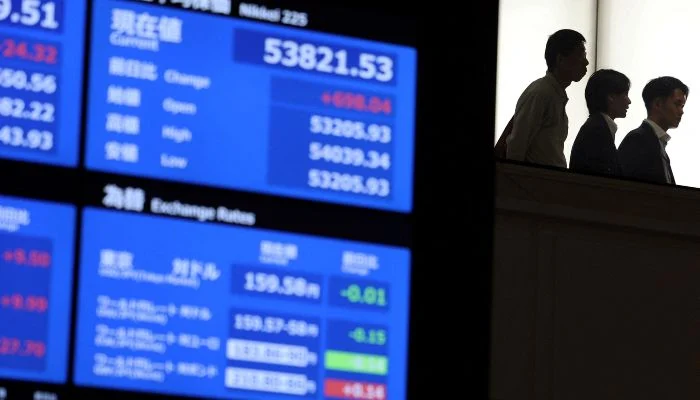
The Pakistan Stock Exchange (PSX) witnessed a strong rebound on Tuesday, with the benchmark KSE-100 index recovering more than 4,000 points during intraday trading as investor sentiment improved after a volatile previous session.
The index gained 4,132.44 points, or 2.57%, reaching 164,723.77 at 11:04am compared to the previous close of 160,591.33 points. The recovery came a day after the market experienced a sharp decline of around 6,600 points amid heightened geopolitical uncertainty.
On Monday, stocks had come under heavy pressure following inconclusive Iran–US talks held in Islamabad and renewed fears of disruptions in global oil supply routes, particularly the Strait of Hormuz. Reports of escalating tensions and concerns over a potential blockade triggered panic selling across the market, pushing oil prices above $100 per barrel and weighing heavily on equities.
However, sentiment showed signs of stabilization on Tuesday as diplomatic efforts to resume Iran–US dialogue reportedly continued. Officials and diplomats indicated that Pakistan and other stakeholders were actively engaged in encouraging a return to negotiations to prevent further escalation.
PSX drops sharply as geopolitical tensions and oil price surge hit sentiment
On the economic front, Fitch Ratings reaffirmed Pakistan’s long-term foreign-currency credit rating at “B-”, which provided some support to investor confidence and helped offset negative global cues.
Market analysts noted that while volatility remains elevated due to geopolitical risks and oil price fluctuations, the partial recovery reflects cautious optimism among investors.
Broader concerns remain tied to global energy markets and potential supply disruptions, as well as the impact of external shocks on inflation and Pakistan’s macroeconomic stability.
Despite ongoing uncertainty, the intraday rebound suggests that investors are selectively returning to equities, although market direction is expected to remain sensitive to developments in global diplomacy and energy prices in the coming sessions.






5 minutes ago

10 minutes ago
17 minutes ago
22 minutes ago
3 hours ago
4 hours ago
- Asian markets showed a mixed performance on Friday while oil prices continued to rise, as uncertainty surrounding a fragile Middle…
- United States forces have seized an Iranian vessel during an operation in the Indian Ocean, escalating already heightened tensions…
- US report reveals details on Iranian leader health condition, as the New York Times published claims about Iran’s new Supreme…
- Trump sees Israel Lebanon peace possible this year, as US President Donald Trump expressed optimism about improved relations. He said…
 Federal health authorities have ordered strict nationwide enforcement of a ban on conventional disposable syringes and initiated a policy review…
 Pakistan’s second national anti-polio campaign of 2026 is continuing across the country, with efforts now in its sixth day as…
 A shocking report by BBC has triggered nationwide outrage in Pakistan after alleging severe medical malpractice at a Tehsil Headquarter…
 Pakistan’s second National Anti-Polio Campaign of 2026 is continuing across the country with full momentum, as health workers aim to…




- Residents of Karachi will face a significant water shortage over…5 minutes ago
- Asian markets showed a mixed performance on Friday while oil…10 minutes ago
- At least two suspected robbers were killed in separate police…17 minutes ago
- United States forces have seized an Iranian vessel during…22 minutes ago