


27th Amendment Shifts Constitutional Authority from SC to FCC
 Web Desk
|
2 months ago
Web Desk
|
2 months ago
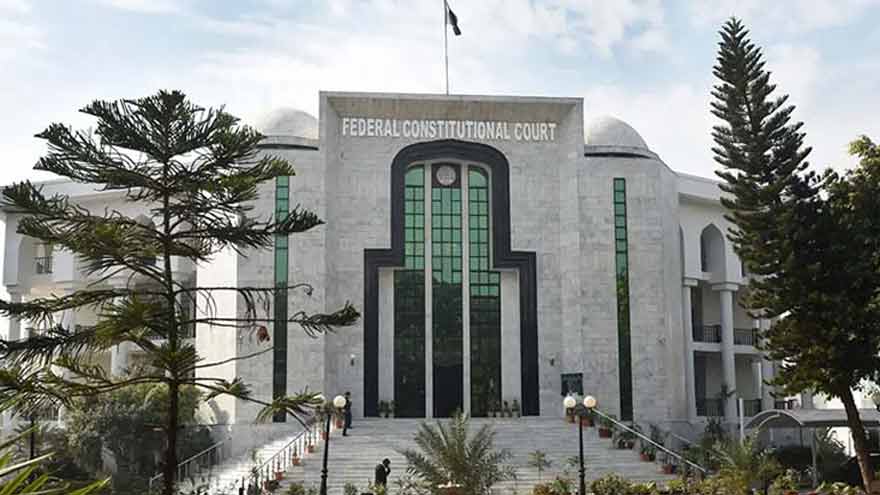
ISLAMABAD: The Federal Constitutional Court of Pakistan has ruled that the Supreme Court can no longer interpret the constitution and laws. The decision follows the 27th Constitutional Amendment. Justice Aamir Farooq delivered the landmark verdict. He clarified that before the amendment, the Supreme Court held the power of constitutional interpretation. However, the new framework transfers that authority entirely to the Federal Constitutional Court.
The court stated that it now holds sole power to interpret constitutional and legal provisions. It also has the authority to review the constitutional validity of legislation. Furthermore, the court can summon records of any case related to constitutional interpretation. Justice Farooq explained that this shift reflects the intent of the 27th Amendment. The ruling significantly changes Pakistan’s judicial structure.
The verdict was issued in the context of a sales tax case. During the proceedings, Justice Farooq emphasized that the amendment removed the Supreme Court’s review powers. He stated that the Supreme Court can no longer examine legal interpretations or legislation. This clarification aims to remove ambiguity about judicial authority. Legal observers describe the ruling as historic.
Read more : Federal Cabinet Meeting Scheduled After 27th Constitutional Amendment
As a result, the Federal Constitutional Court now stands as the final authority on constitutional matters. Lawyers and institutions must approach it for interpretation disputes. Analysts say the move centralizes constitutional review under one judicial body. Some experts believe this may streamline legal processes. Others argue it alters the traditional balance within the judiciary.
the decision marks a major shift in Pakistan’s judicial landscape. The 27th Amendment has redefined the hierarchy of constitutional interpretation. The Federal Constitutional Court’s jurisdiction has expanded significantly. Authorities expect future constitutional challenges to be directed to this court. The ruling sets a new precedent for legal and constitutional governance in Pakistan.










14 minutes ago
23 minutes ago

34 minutes ago

44 minutes ago

53 minutes ago
57 minutes ago
- The United States has announced the termination of a temporary waiver that had allowed India to purchase discounted Russian oil,…
- All eight people on board an Airbus H130 were killed after the aircraft crashed in Sekadau Regency, Indonesian authorities confirmed…
- NASA astronauts have confirmed that the re-entry phase of the Artemis II mission was smooth, although minor charring was observed…
 Lebanese Army has reported multiple “acts of aggression” by Israel, alleging violations of a recently implemented ceasefire agreement in southern…
 A shocking report by BBC has triggered nationwide outrage in Pakistan after alleging severe medical malpractice at a Tehsil Headquarter…
 Pakistan’s second National Anti-Polio Campaign of 2026 is continuing across the country with full momentum, as health workers aim to…
 A new case of monkeypox has been reported in Karachi, raising fresh concerns among health authorities in the city. According…
 Olivia Munn has spoken about her experience battling breast cancer, highlighting the crucial role her husband, John Mulaney, played throughout…






- The United States has announced the termination of a temporary…14 minutes ago
- The government of Sindh has announced a strict zero-tolerance policy…23 minutes ago
- All eight people on board an Airbus H130 were killed…34 minutes ago
- NASA astronauts have confirmed that the re-entry phase of the…44 minutes ago