


Court orders KE to pay Rs13.5m in electrocution death case
 Rabbia Zafar
|
1 hour ago
Rabbia Zafar
|
1 hour ago
A senior civil judge at the City Court has ordered K-Electric to pay Rs13.5 million in compensation to the family of a man who died after being electrocuted during rainfall in Karachi in 2019.
The case was filed after the death of a citizen, identified as Sheikh Saad, who was reportedly electrocuted when he came into contact with a live electric source during heavy rain. The petitioner’s lawyer argued that residents had repeatedly complained to K-Electric about suspected electric current in a utility pole, but no corrective action was taken.
The counsel maintained that K-Electric failed in its duty to properly maintain its electrical infrastructure and ensure public safety, which ultimately led to the fatal incident.
However, K-Electric’s lawyer contested the allegations, stating that the pole in question did not belong to the company and that the leakage of current originated from wiring connected to a private generator. The defence also argued that the deceased had placed himself in a dangerous location, contributing to the incident.
Pakistan moves to sell 50–100% shares of three power distribution companies
After hearing both sides, the court observed that electricity distribution companies carry an exceptional responsibility to ensure public safety. The judgment noted that the presence of third-party wiring on a pole does not absolve K-Electric of its duty to maintain safe conditions in public spaces.
The court further stated that the existence of electric current in a public utility structure itself reflects negligence. It also held that the deceased’s attempt to save a child could not be considered complete negligence, adding that the law takes a more lenient view of actions taken to save human life.
The court directed K-Electric to pay the compensation amount within 90 days to the legal heirs of the deceased. The ruling highlights ongoing concerns regarding electrical safety in urban areas, particularly during monsoon seasons when such incidents tend to rise.
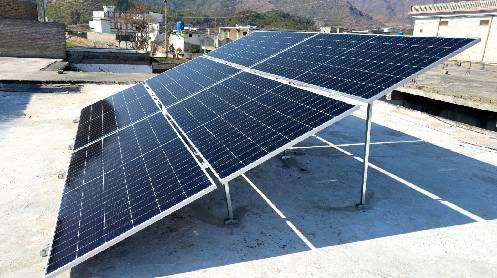
Stakeholders urge tax cut on lithium batteries to boost renewable energy in Pakistan
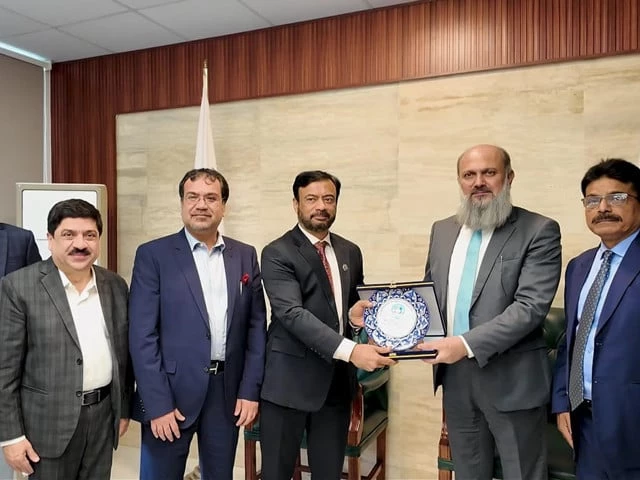
Pakistan pushes textile exports, APBUMA plans global expansion at US exhibition

Gold prices in Pakistan drop sharply amid global selloff and strong US dollar
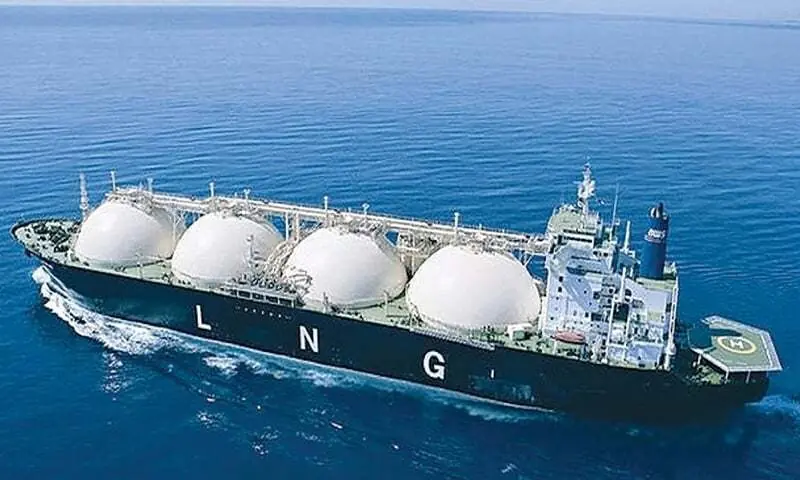
Second LNG cargo from Qatar arrives in Pakistan within three days
HEC appoints NUST rector as national chair for AI and robotics

IMF proposes tougher fiscal conditions for Pakistan, including energy price hikes
Mother kills three children before suicide in Mailsi domestic tragedy

7 minutes ago

14 minutes ago

22 minutes ago

25 minutes ago

36 minutes ago

43 minutes ago
- Donald Trump has claimed that a “decisive attack” on Iran was halted following requests from “very good people” in Pakistan…
 The Middle East’s largest annual contemporary art fair, Art Dubai, opened in Dubai on Friday under the shadow of the…
- Itamar Ben-Gvir led thousands of Israelis into the compound of Al-Aqsa Mosque, where he reportedly engaged in a highly provocative…
- Benjamin Netanyahu has claimed that Israeli forces now control 60 percent of the Gaza Territory. The statement has raised concerns…

 A major shift in medical terminology has been announced for Polycystic Ovarian Syndrome (PCOS), a common hormonal disorder affecting millions…
 Health authorities are working to contain a potential international spread of hantavirus after new suspected cases emerged across multiple countries,…
 The Indus Hospital, located in Karachi’s Korangi area, has earned widespread recognition for providing free and quality healthcare services to…
- The Healthcare Devices Association of Pakistan (HDAP) has raised serious concerns over the continued presence of banned reusable syringes in…


- enewable energy stakeholders in Pakistan have called on the Engineering…7 minutes ago
- Federal Minister for Commerce Jam Kamal Khan met a delegation…14 minutes ago
- Gold prices in Pakistan witnessed a steep decline on Friday,…22 minutes ago
- A second liquefied natural gas (LNG) cargo from Qatar has…25 minutes ago