


Not Implementing Policy for Deceased Employees’ Children Violates Justice: SC
 Web Desk
|
4 months ago
Web Desk
|
4 months ago

The Supreme Court of Pakistan set aside a Sindh High Court decision regarding the employment of children of deceased National Bank employees. The apex court criticized delays and policy violations in the handling of the petitions.
The Sindh High Court had earlier rejected the constitutional petitions filed by affected families. The Supreme Court ruled that this decision was not sustainable under existing policies.
The court directed the president of the National Bank of Pakistan to decide all pending petitions within three months. These petitions, filed in 2019 and 2022, must follow the policy in force at the time of filing.
The Supreme Court noted that the petitions had remained pending for years without any response from the bank. Such inaction, the court said, amounted to a denial of justice to the families.
Read more : Court Suspends KP Government’s Public School Privatization Plan
The court clarified that judicial decisions apply prospectively unless explicitly stated otherwise. Since the 2011 policy governed these cases, decisions must follow its framework.
The apex court emphasized that failing to follow the relevant policy violates principles of justice. Dependents of deceased employees cannot be ignored through administrative delays or misapplied policies.
The three-member bench, headed by Justice Muhammad Ali Mazhar, delivered the verdict. The ruling provides clear guidance on timely decision-making and adherence to policies in compassionate employment cases.





Indian firm accused of bypassing US sanctions via Iran trade

UK raises terror alert after Golders Green stabbing attack


44 minutes ago
1 hour ago
3 hours ago
4 hours ago
5 hours ago
5 hours ago
- A new survey shows that a majority of Americans believe the US military action against Iran was a mistake. The…
- Iran said diplomacy remains open if the United States changes its threatening tone, according to Foreign Minister Abbas Araghchi. He…
- Israel provided the UAE with an advanced laser defense system during the Iran war, according to a British newspaper report.…
 British authorities have charged a 45-year-old man with two counts of attempted murder following a stabbing attack in Golders Green,…
 The Healthcare Devices Association of Pakistan (HDAP) has raised serious concerns over the continued presence of banned reusable syringes in…
- Federal health authorities have ordered strict nationwide enforcement of a ban on conventional disposable syringes and initiated a policy review…
 Pakistan’s second national anti-polio campaign of 2026 is continuing across the country, with efforts now in its sixth day as…
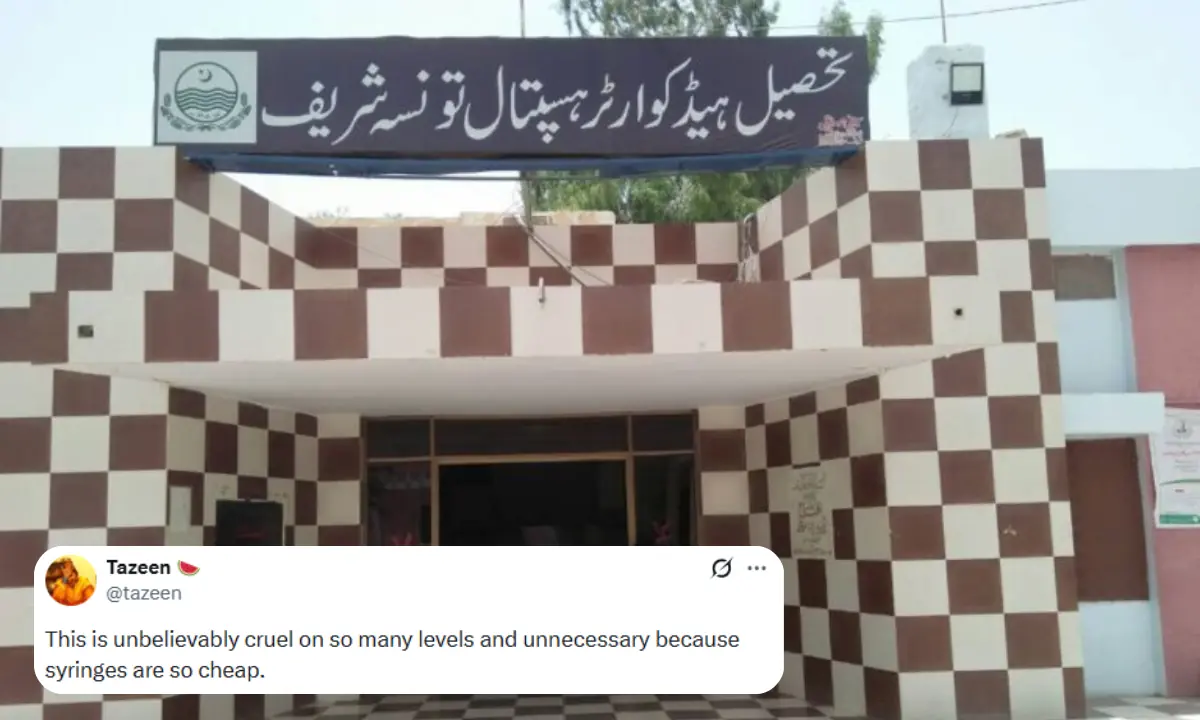
 A shocking report by BBC has triggered nationwide outrage in Pakistan after alleging severe medical malpractice at a Tehsil Headquarter…




- A new survey shows that a majority of Americans believe…44 minutes ago
- Iran said diplomacy remains open if the United States changes…1 hour ago
- Israel provided the UAE with an advanced laser defense system…3 hours ago
- The arrival of LNG has ended power load management, said…4 hours ago