


Pakistan’s Gold Market Faces Reforms Amid Smuggling
 Web Desk
|
6 months ago
Web Desk
|
6 months ago
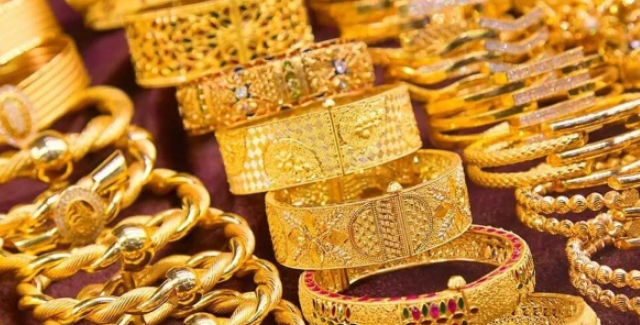
Pakistan’s gold market remains largely informal, with over 90% of the trade conducted through undocumented channels, according to a recent report by the Competition Commission of Pakistan (CCP). The study reveals widespread tax evasion, weak regulation, and price manipulation, making the market vulnerable to fraud and smuggling. Despite consuming 60 to 90 tonnes of gold annually, most of this trade escapes formal oversight.
The CCP report highlights that many gold traders operate without registration, and most transactions are conducted in cash to avoid taxes. In 2024, Pakistan officially imported gold worth $17 million, but the true volume is likely much higher due to under-invoicing and smuggling. The lack of standardized pricing mechanisms has led to informal price-setting, with no national system in place to regulate gold prices.
Market manipulation is another major issue, with trader groups influencing both the supply and pricing of gold. This creates the potential for artificial shortages and price hikes. The report also points to inadequate gold testing facilities, leading to fraud and adulteration in the market. Moreover, Pakistan’s gold refining capacity is minimal, weakening control over purity and supply chain traceability.
The CCP’s report emphasizes that the gold market suffers from a lack of reliable data and documentation. This absence of information has hindered effective policymaking and oversight. The commission also criticizes the complex tax structure, which it argues incentivizes smuggling and off-the-books trading, contributing to the market’s fragmented and opaque nature.
To address these issues, the CCP has recommended urgent reforms, particularly ahead of the Reko Diq Gold Project, which could revolutionize the country’s gold supply chain. Proposed reforms include establishing a Gold and Gemstone Authority, licensing gold traders, tightening anti-money laundering rules, and implementing a quality testing and grading system. These changes aim to bring transparency, accountability, and competitiveness to Pakistan’s gold market.
READ MORE : Kuwait Bans Cash Transactions in Gold, Precious Metals
The Ministry of Commerce and Industry in Kuwait has implemented a ban on cash transactions for companies operating in the gold, precious stones, and precious metals sectors. According to Ministerial Resolution No. 182 of 2025, all companies must now complete transactions using non-cash methods approved by the Central Bank of Kuwait.
The new measure aims to enhance transparency, prevent money laundering, and ensure compliance with financial oversight standards. The resolution mandates that payments be made digitally or through other approved non-cash channels. The ministry emphasized that failure to comply with these rules would lead to the closure of offending businesses and their referral to investigative authorities.



KP govt plans action against employees linked to terrorism

Eurovision crowd protests during Israeli contestant performance



5 hours ago

5 hours ago
5 hours ago

6 hours ago
6 hours ago

6 hours ago
- Indian Prime Minister Narendra Modi has reportedly reduced the size of his official motorcade as part of fuel-saving measures amid…
- Russian President Vladimir Putin has welcomed the latest test launch of the country’s strategic nuclear missile Sarmat, calling it “the…
 The Eurovision Song Contest faced renewed controversy on Tuesday after audience members protested during the performance of Israeli contestant Noam…
- At least 13 people were killed in a series of Israeli strikes in southern Lebanon on Tuesday, according to Lebanon’s…
 A major shift in medical terminology has been announced for Polycystic Ovarian Syndrome (PCOS), a common hormonal disorder affecting millions…
 Health authorities are working to contain a potential international spread of hantavirus after new suspected cases emerged across multiple countries,…
 The Indus Hospital, located in Karachi’s Korangi area, has earned widespread recognition for providing free and quality healthcare services to…
 The Healthcare Devices Association of Pakistan (HDAP) has raised serious concerns over the continued presence of banned reusable syringes in…



- The first liquefied natural gas (LNG) cargo from Qatar in…5 hours ago
- Indian Prime Minister Narendra Modi has reportedly reduced the size…5 hours ago
- Singapore has strict public property laws, and even picking up…5 hours ago
- Russian President Vladimir Putin has welcomed the latest test launch…6 hours ago