


Sindh struggles to meet wheat procurement target
 Rabbia Zafar
|
32 minutes ago
Rabbia Zafar
|
32 minutes ago
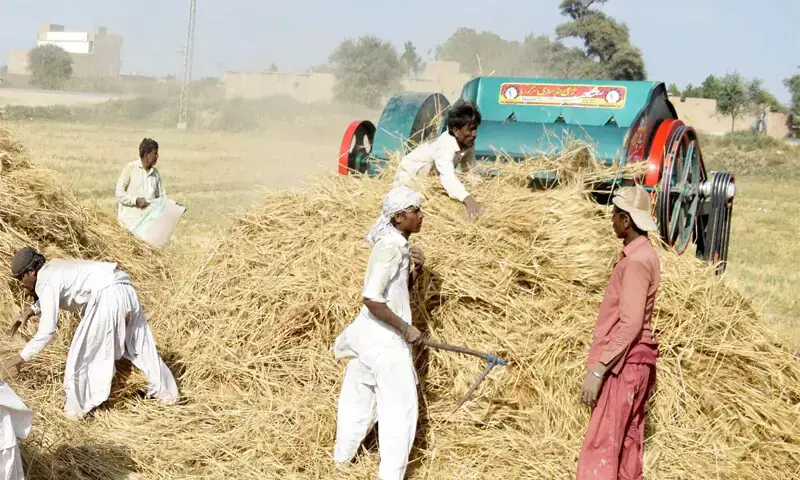
Sindh’s wheat procurement campaign is facing major challenges as the provincial food department has managed to purchase only around 65,000 tonnes of wheat against its official target of one million tonnes for the 2025-26 season.
According to official figures available until May 12, the procurement shortfall comes despite the near completion of wheat harvesting across the province. Experts believe the government is unlikely to achieve its target because farmers have preferred selling their crop in the open market where prices are significantly higher than the official support rate.
The Sindh government had fixed the wheat procurement price at Rs3,500 per 40 kilograms after resuming procurement following a one-year pause linked to International Monetary Fund conditions. Procurement was limited to small farmers registered under the Benazir Hari Card programme, with initial restrictions allowing each farmer to sell only 10 bags of wheat to the government.
NADRA explains why living citizens are mistakenly declared dead
However, by the time procurement officially started on April 1, market prices had already increased sharply. Wheat prices in the open market rose from around Rs7,800 per 100kg bag during early harvesting to nearly Rs11,000 by May. As a result, growers opted to sell to private buyers rather than government procurement centres.
Agriculture experts and farmer representatives criticised the delayed procurement process, arguing that the government failed to begin purchasing wheat when harvesting started in February and March. Sindh Abadgar Board President Mahmood Nawaz Shah said any increase in the support price at this stage would mainly benefit middlemen and private stockists instead of farmers.
The rising wheat prices have also pushed flour prices higher, increasing from around Rs100 per kilogram in March to nearly Rs140 per kilogram in May. Industry representatives have warned that continued shortages and hoarding could force the government to consider wheat imports to stabilise supplies and control flour prices.

Oil prices rise again as US-Iran tensions fuel market uncertainty

Mid-air collision at Idaho air show prompts investigation



Pakistan urged to shift from stabilisation to growth-focused reforms



10 minutes ago
17 minutes ago

27 minutes ago

32 minutes ago

38 minutes ago

45 minutes ago
- Global oil prices have surged once again amid renewed concerns over rising tensions between the United States and Iran, which…
- Two aircraft collided during an air show in the U.S. state of Idaho, triggering an emergency response and an immediate…
- Israeli Prime Minister Benjamin Netanyahu has said that Israel’s military campaign targeting those responsible for the October 7, 2023 attacks…
- At least two people were killed and several others injured after a strong earthquake struck China’s southwestern Guangxi region, triggering…
 A major shift in medical terminology has been announced for Polycystic Ovarian Syndrome (PCOS), a common hormonal disorder affecting millions…
 Health authorities are working to contain a potential international spread of hantavirus after new suspected cases emerged across multiple countries,…
 The Indus Hospital, located in Karachi’s Korangi area, has earned widespread recognition for providing free and quality healthcare services to…
 The Healthcare Devices Association of Pakistan (HDAP) has raised serious concerns over the continued presence of banned reusable syringes in…





- Global oil prices have surged once again amid renewed concerns…10 minutes ago
- Two aircraft collided during an air show in the U.S.…17 minutes ago
- Israeli Prime Minister Benjamin Netanyahu has said that Israel’s military…27 minutes ago
- Sindh’s wheat procurement campaign is facing major challenges as the…32 minutes ago