


UAE casualties rise as falling debris causes damage
 Rabbia Zafar
|
4 weeks ago
Rabbia Zafar
|
4 weeks ago
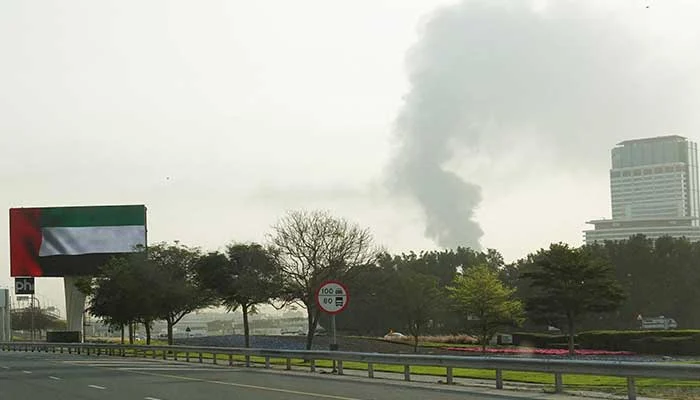
The death toll in the United Arab Emirates has climbed to 10, with more than 200 people injured since the start of the Middle East conflict on February 28, as debris from intercepted missiles and drones continues to cause damage.
Officials confirmed that among those killed are four Pakistani nationals, underscoring the impact of the crisis on expatriate communities living in the Gulf region. Authorities say falling debris from intercepted aerial threats has increasingly struck civilian and industrial areas, raising safety concerns.
In the latest incident, debris ignited fires at the Habshan gas processing plant in Abu Dhabi. The facility, considered a major energy installation, has suspended operations while damage assessments are underway. During the evacuation, an Egyptian national lost his life, and four others — including two Pakistanis — suffered minor injuries, according to official sources.
Missile Debris in Abu Dhabi Kills Pakistani Citizen, Two Others
Another incident occurred in Ajban, located northeast of Abu Dhabi, where debris from intercepted projectiles injured 12 people. Those hurt included citizens of Nepal and India. One individual remains in critical condition, while others sustained less severe injuries.
The UAE Ministry of Defence stated that its air defence systems successfully intercepted multiple ballistic and cruise missiles, along with drones reportedly launched from Iran in the past 24 hours. While interceptions have prevented larger-scale destruction, officials warned that falling fragments continue to pose serious risks.
Authorities added that such attacks have been occurring almost daily since the conflict began, placing increasing strain on emergency services and critical infrastructure.
The situation highlights the growing regional impact of the conflict, with civilian safety and key facilities facing ongoing threats.










38 minutes ago
2 hours ago
2 hours ago
4 hours ago
5 hours ago
5 hours ago
- The US Treasury has warned that ships paying Iran for safe passage through the Strait of Hormuz could face sanctions.…
- A new survey shows that a majority of Americans believe the US military action against Iran was a mistake. The…
- Iran said diplomacy remains open if the United States changes its threatening tone, according to Foreign Minister Abbas Araghchi. He…
- Israel provided the UAE with an advanced laser defense system during the Iran war, according to a British newspaper report.…
 The Healthcare Devices Association of Pakistan (HDAP) has raised serious concerns over the continued presence of banned reusable syringes in…
- Federal health authorities have ordered strict nationwide enforcement of a ban on conventional disposable syringes and initiated a policy review…
 Pakistan’s second national anti-polio campaign of 2026 is continuing across the country, with efforts now in its sixth day as…
 A shocking report by BBC has triggered nationwide outrage in Pakistan after alleging severe medical malpractice at a Tehsil Headquarter…




- The US Treasury has warned that ships paying Iran for…38 minutes ago
- A new survey shows that a majority of Americans believe…2 hours ago
- Iran said diplomacy remains open if the United States changes…2 hours ago
- Israel provided the UAE with an advanced laser defense system…4 hours ago