


IMF warns Middle East war to slow growth, raise inflation
 Rabbia Zafar
|
2 weeks ago
Rabbia Zafar
|
2 weeks ago

The head of the International Monetary Fund has warned that the ongoing Middle East conflict will push global inflation higher and slow economic growth, as disruptions in energy supply ripple across the world economy.
Speaking ahead of the IMF’s upcoming outlook report, Managing Director Kristalina Georgieva said the war has caused unprecedented disruption to global energy markets. The crisis has significantly affected the Strait of Hormuz, a critical corridor through which nearly one-fifth of the world’s oil and gas supplies pass.
According to Georgieva, global oil supply has already shrunk by around 13 percent due to the conflict, with knock-on effects extending to supply chains, including fertilisers and industrial gases. Even if hostilities end soon, the IMF is expected to revise down its global growth projections while raising inflation forecasts in its World Economic Outlook due on April 14.
Government Cuts Petrol Price 80 Rupees Following IMF Negotiations
The conflict is also expected to dominate discussions at the IMF and World Bank spring meetings in Washington, DC next week. Officials will assess the economic fallout and consider policy responses amid rising uncertainty.
Georgieva highlighted that poorer, energy-importing nations will be hardest hit, as many lack the financial capacity to shield their populations from rising fuel and food costs. She cautioned against broad energy subsidies, warning they could worsen inflationary pressures.
The war has also raised concerns about food security. The World Food Programme has warned that millions could face acute hunger if disruptions persist, particularly if fertiliser supplies are affected.
While the IMF does not yet see a full-scale food crisis, Georgieva stressed that prolonged conflict could deepen economic instability worldwide, leaving lasting consequences even after the fighting subsides.

Cow injured in Muzaffargarh as unknown attackers cut tongue

Robert Downey Jr returns as Doctor Doom in Marvel twist

Child injured after shocking incident at Indian wedding event

Hajj operations begin from Multan with first flight to Madinah

Pakistan’s nationwide anti-polio campaign reaches millions of children

Police officer martyred after vehicle hits checkpoint in Karachi

1 hour ago

3 hours ago

3 hours ago

3 hours ago
3 hours ago

3 hours ago
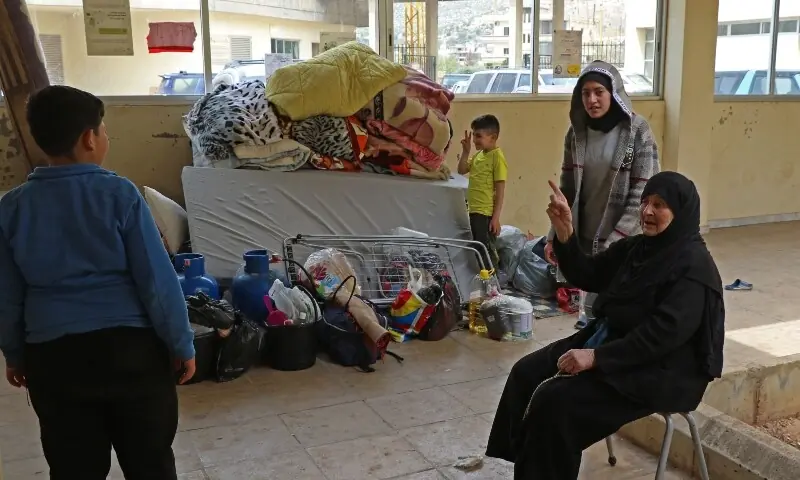
 Residents of the southern Lebanese city of Nabatiyeh are grappling with the aftermath of a deadly airstrike that flattened a…
 Former US President Donald Trump has said that a government review of UFO-related material has uncovered a number of “very…
 Large public gatherings were held in Iran and Yemen as demonstrators expressed political solidarity with regional leadership and allied movements.…
- Tensions between the United States and Iran escalated again on Saturday as President Donald Trump said the US may continue…

- Pakistan’s second national anti-polio campaign of 2026 is continuing across the country, with efforts now in its sixth day as…
 A shocking report by BBC has triggered nationwide outrage in Pakistan after alleging severe medical malpractice at a Tehsil Headquarter…
 Pakistan’s second National Anti-Polio Campaign of 2026 is continuing across the country with full momentum, as health workers aim to…
 A new case of monkeypox has been reported in Karachi, raising fresh concerns among health authorities in the city. According…




- Law enforcement agencies in Quetta successfully foiled a major smuggling…1 hour ago
- A disturbing case of animal cruelty has emerged from Muzaffargarh,…3 hours ago
- Robert Downey Jr. is set to make a dramatic return…3 hours ago
- Pakistan International Airlines (PIA) has officially announced the start of…3 hours ago