


Gene-editing breakthrough shows potential for Down syndrome research
 Rabbia Zafar
|
2 hours ago
Rabbia Zafar
|
2 hours ago

Scientists have developed an improved version of the CRISPR gene-editing system that shows early laboratory potential to silence the extra chromosome responsible for Down syndrome. The research offers a new direction in understanding and possibly treating the genetic condition, although experts stress it remains at a very early experimental stage.
Down syndrome occurs when individuals are born with an extra copy of chromosome 21, resulting in 47 chromosomes instead of the usual 46. This additional chromosome disrupts normal gene activity and is linked to cognitive impairment and a higher risk of early-onset Alzheimer’s disease.
Dr. Volney Sheen of Beth Israel Deaconess Medical Center in Boston, who led the study, explained that because hundreds of genes are involved, targeting a single gene is not enough. Instead, silencing the entire extra chromosome could offer a more effective approach.
The research builds on a natural biological process seen in females, where the gene XIST inactivates one of the two X chromosomes in cells. Scientists previously attempted to insert XIST into chromosome 21 using standard CRISPR methods, but faced significant technical limitations.
Iranian Speaker Praises Pakistan Role in Lebanon Ceasefire Mediation
The new modified CRISPR technique significantly improved the efficiency of inserting the XIST gene—by about 30 times compared to conventional methods—according to findings published in the journal Proceedings of the National Academy of Sciences (PNAS).
Researchers believe this could eventually lead to therapies that reduce or neutralize the effects of the extra chromosome. However, experts caution that the work is still limited to test-tube and cellular experiments, and no clinical application in humans is currently available.
Independent scientists have described the findings as promising but preliminary, emphasizing that much more research is needed before any real-world treatment can be developed.
Beyond Down syndrome, the broader advancement of CRISPR technology is also being explored for immune system engineering and treatment of diseases such as HIV, influenza, and cancer, highlighting its growing potential in modern medicine.

Shehbaz Sharif joins Erdogan and Qatar emir in Antalya trilateral talks

Reports claim second us iran talks may be held in pakistan

Nabatiyeh residents mourn after deadly strike as Lebanon ceasefire begins

Trump says UFO file review uncovered ‘interesting’ documents

Pakistan military and interior leadership conclude high-level Iran visit
Pakistan launches national medical tourism initiative to attract international patients

Pakistan name four uncapped players in squad for Bangladesh test series

Tehran and Sana’a see large rallies amid regional solidarity



10 minutes ago

23 minutes ago

32 minutes ago

43 minutes ago

59 minutes ago

1 hour ago
- Residents of the southern Lebanese city of Nabatiyeh are grappling with the aftermath of a deadly airstrike that flattened a…
- Former US President Donald Trump has said that a government review of UFO-related material has uncovered a number of “very…
 Large public gatherings were held in Iran and Yemen as demonstrators expressed political solidarity with regional leadership and allied movements.…
- Tensions between the United States and Iran escalated again on Saturday as President Donald Trump said the US may continue…

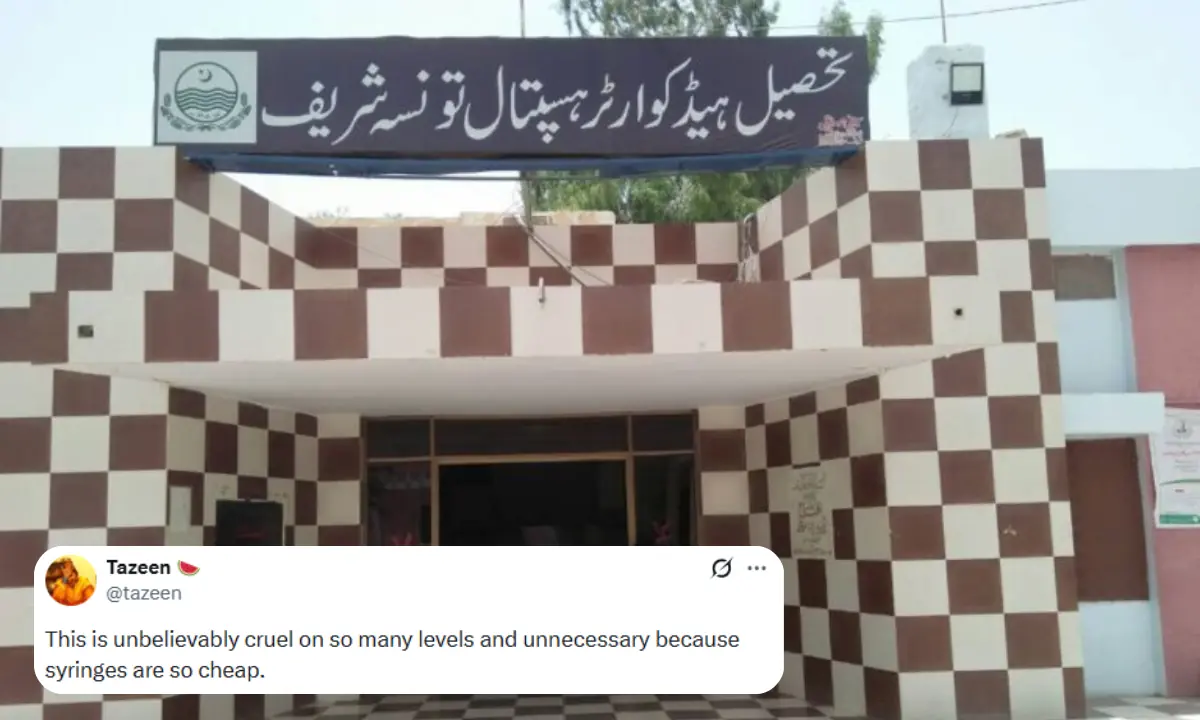
 A shocking report by BBC has triggered nationwide outrage in Pakistan after alleging severe medical malpractice at a Tehsil Headquarter…
 Pakistan’s second National Anti-Polio Campaign of 2026 is continuing across the country with full momentum, as health workers aim to…
 A new case of monkeypox has been reported in Karachi, raising fresh concerns among health authorities in the city. According…
 Olivia Munn has spoken about her experience battling breast cancer, highlighting the crucial role her husband, John Mulaney, played throughout…





- Prime Minister Muhammad Shehbaz Sharif participated in a trilateral meeting…10 minutes ago
- An American television network, citing Iranian sources, has reported that…23 minutes ago
- Residents of the southern Lebanese city of Nabatiyeh are grappling…32 minutes ago
- Former US President Donald Trump has said that a government…43 minutes ago