IMF seeks mandatory asset declarations from civil bureaucrats
 Web Desk
|
4 months ago
Web Desk
|
4 months ago
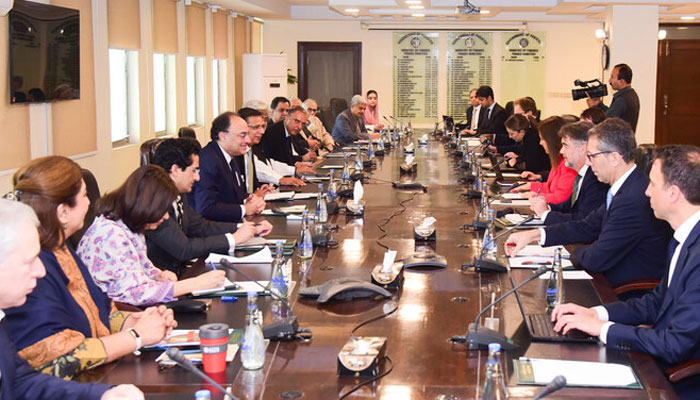
The International Monetary Fund (IMF) has imposed new conditions on Pakistan under its $7 billion Extended Fund Facility (EFF) program to strengthen transparency and financial stability. These measures include mandatory asset disclosures by senior civil servants, reforms in key sectors, and stronger controls against financial crimes. The IMF asset declaration requirement aims to reduce corruption and improve public trust in state institutions.
Under the new conditions, the IMF has also asked Pakistan to prepare a detailed report on incentives for overseas Pakistanis to send remittances through legal channels. These steps are part of broader reforms designed to improve governance and support economic recovery while ensuring accountability at all levels of government.
To strengthen institutional capacity against corruption, Pakistan has begun preparations to amend its asset declaration system. By December 2026, the assets of senior federal civil servants will be published on an official government website. Later, this system will be expanded to include senior provincial officers, and banks will be granted full access for verification purposes.
Also Read: Pakistan’s Economy Showing Stability Despite Challenges: IMF
The IMF has also directed authorities to update and publish a national risk assessment on money laundering and terrorist financing by March 2026. Improved risk-based monitoring will focus on sectors such as real estate, jewelry, and precious metals. Additionally, the Securities and Exchange Commission of Pakistan (SECP) will digitize the beneficial ownership register by January 2026 to increase transparency.
In its staff report, the IMF stated that effective enforcement of laws will strengthen Pakistan’s financial system and reduce economic risks. Authorities have been advised to closely examine trade-based money laundering and apply preventive measures. These reforms, including the IMF asset declaration requirement, are expected to enhance accountability, curb corruption, and support long-term economic stability.


Cow injured in Muzaffargarh as unknown attackers cut tongue

Robert Downey Jr returns as Doctor Doom in Marvel twist


Child injured after shocking incident at Indian wedding event

Hajj operations begin from Multan with first flight to Madinah

Pakistan’s nationwide anti-polio campaign reaches millions of children

 Residents of the southern Lebanese city of Nabatiyeh are grappling with the aftermath of a deadly airstrike that flattened a…
 Former US President Donald Trump has said that a government review of UFO-related material has uncovered a number of “very…
 Large public gatherings were held in Iran and Yemen as demonstrators expressed political solidarity with regional leadership and allied movements.…
- Tensions between the United States and Iran escalated again on Saturday as President Donald Trump said the US may continue…




 Pakistan’s second national anti-polio campaign of 2026 is continuing across the country, with efforts now in its sixth day as…
 A shocking report by BBC has triggered nationwide outrage in Pakistan after alleging severe medical malpractice at a Tehsil Headquarter…
 Pakistan’s second National Anti-Polio Campaign of 2026 is continuing across the country with full momentum, as health workers aim to…
 A new case of monkeypox has been reported in Karachi, raising fresh concerns among health authorities in the city. According…