


SFJ pledges $1bn for Trump peace panel, calls for Khalistan dialogue
 Web Desk
|
3 months ago
Web Desk
|
3 months ago

KARACHI / WASHINGTON — Sikhs For Justice said it is willing to invest $1 billion to become part of President Donald Trump’s proposed Board of Peace. The group urged Trump to engage Indian Prime Minister Narendra Modi in discussions on holding a Khalistan referendum in Indian-administered Punjab under an international peace framework.
Speaking at the Karachi Press Club, SFJ said the proposed funding would support diplomatic efforts aimed at preventing a wider regional crisis. The organization said early engagement could help defuse tensions before they spiral into conflict.
“The Board of Peace is a platform to stop a deadly conflict before it breaks out,” said Gurpatwant Singh Pannun, general counsel for Sikhs For Justice. He said the group is prepared to commit substantial resources to promote peace through negotiations.
Pannun described Punjab as strategically important, calling it the “Greenland of South Asia” because of its geography and regional influence. He said resolving the issue through democratic means could stabilize South Asia, while continued inaction could increase the risk of a major confrontation.
SFJ said the situation in Punjab is deteriorating rapidly. Referring to Indian government disclosures, the group claimed more than 8,000 Sikhs were detained in the past week amid mass arrests, alleged staged encounters, and terrorism-related cases linked to support for the Khalistan referendum.
“These developments point to the early stages of a serious conflict,” Pannun said.
The organization said Sikhs, numbering over 30 million globally, form a distinct nation with a clear political will. It argued that a negotiated referendum remains the only viable way to prevent escalation. India has consistently rejected calls for such a vote, saying the Khalistan movement threatens its sovereignty and territorial integrity.
Pannun placed the tensions in historical context, referring to the 1950 constitution, the 1984 military operation at the Golden Temple, subsequent security operations in Punjab, and the anti-Sikh violence of November 1984. He said those events led to years of insurgency and counterinsurgency that claimed nearly 100,000 lives.
“What began as genocide and economic destruction is now moving toward ethnic cleansing,” Pannun said, language the Indian government has long disputed.
SFJ contrasted India’s regional role with its vision for Punjab, saying India poses nuclear and regional security risks to neighboring countries. A peaceful and democratic Punjab, it argued, could emerge as a U.S.-aligned partner contributing to stability in South Asia.
“The Sikh community is globally recognized for discipline, service, and reliability,” Pannun said. “A democratic Punjab could be a strategic ally that strengthens peace rather than conflict.”
The group stressed that its movement is nonviolent and said more than two million Sikhs worldwide have participated in what it calls the Khalistan referendum. However, Pannun warned that continued repression could fuel instability.
“When ballots are answered with bullets and political expression is met with assassinations and mass detentions, the threat of violence becomes real,” he said. “That is why we are offering $1 billion to join the Board of Peace, so negotiations can begin without delay.”




24 minutes ago
4 hours ago
6 hours ago
6 hours ago
7 hours ago
14 hours ago
 Indian Prime Minister Narendra Modi has reportedly reduced the size of his official motorcade as part of fuel-saving measures amid…
 Russian President Vladimir Putin has welcomed the latest test launch of the country’s strategic nuclear missile Sarmat, calling it “the…
 The Eurovision Song Contest faced renewed controversy on Tuesday after audience members protested during the performance of Israeli contestant Noam…
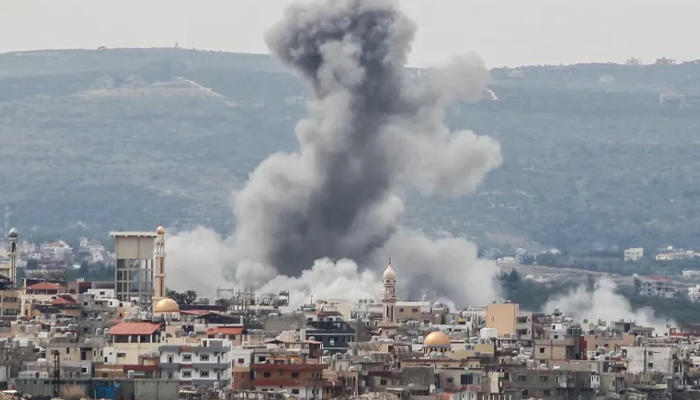
- At least 13 people were killed in a series of Israeli strikes in southern Lebanon on Tuesday, according to Lebanon’s…
 A major shift in medical terminology has been announced for Polycystic Ovarian Syndrome (PCOS), a common hormonal disorder affecting millions…
 Health authorities are working to contain a potential international spread of hantavirus after new suspected cases emerged across multiple countries,…
 The Indus Hospital, located in Karachi’s Korangi area, has earned widespread recognition for providing free and quality healthcare services to…
 The Healthcare Devices Association of Pakistan (HDAP) has raised serious concerns over the continued presence of banned reusable syringes in…



- Residents across different parts of Karachi are facing severe difficulties…24 minutes ago
- Security forces conducted a major clearance Barkhan operation against militants…4 hours ago
- Cambridge International Education has postponed the A Level Mathematics Paper…6 hours ago
- A major financial scandal has surfaced in Faisalabad involving alleged…6 hours ago