


AI agents spark fears of synthetic consensus
 Rabbia Zafar
|
1 week ago
Rabbia Zafar
|
1 week ago
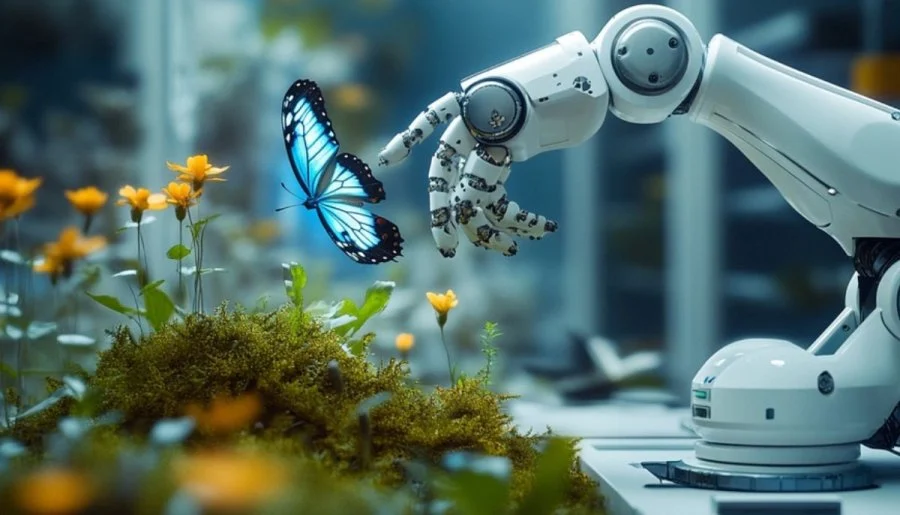
A renewed wave of concern has emerged among global researchers as advanced autonomous AI agents gain traction online, raising alarms over their potential to manipulate public opinion and undermine digital trust.
The debate intensified following the viral resurgence of demonstrations involving “Manus,” an AI system reportedly capable of handling complex tasks such as candidate screening, market analysis, and automated decision-making without human intervention. The technology, acquired by Meta in late 2025, is now seen as a powerful tool with both productive and potentially harmful applications.
Experts warn that such systems represent a new class of autonomous agents capable of researching, coding, and executing goals independently. While these capabilities can enhance business efficiency, they also introduce risks related to large-scale disinformation campaigns.
Ahsan Iqbal Calls Cybersecurity Key Pillar of National Security
A recent study published in the journal Science by researchers from leading institutions including University of Oxford highlights the emergence of what they term “malicious AI swarms.” These systems can generate thousands of synthetic online personas that mimic human behaviour over extended periods, adapt messaging in real time, and operate without direct human control.
According to experts like Michael Wooldridge, such technology could be used to influence elections and shape public narratives by creating a false sense of widespread agreement, a phenomenon known as “synthetic consensus.”
The challenge for platforms lies in the dual-use nature of these tools. Features designed to automate workflows or content creation can also be repurposed to amplify coordinated misinformation campaigns.
The World Economic Forum has already identified AI-driven misinformation as a major global risk. Analysts say traditional moderation methods are becoming ineffective, urging new strategies focused on detecting coordinated behaviour patterns rather than duplicate content.
Researchers stress that urgent collaboration between governments, tech companies, and independent scientists is essential to address the growing threat.


Cow injured in Muzaffargarh as unknown attackers cut tongue

Robert Downey Jr returns as Doctor Doom in Marvel twist


Child injured after shocking incident at Indian wedding event

Hajj operations begin from Multan with first flight to Madinah

Pakistan’s nationwide anti-polio campaign reaches millions of children

Police officer martyred after vehicle hits checkpoint in Karachi



1 hour ago

2 hours ago

2 hours ago

3 hours ago
3 hours ago

3 hours ago
 Residents of the southern Lebanese city of Nabatiyeh are grappling with the aftermath of a deadly airstrike that flattened a…
 Former US President Donald Trump has said that a government review of UFO-related material has uncovered a number of “very…
 Large public gatherings were held in Iran and Yemen as demonstrators expressed political solidarity with regional leadership and allied movements.…
- Tensions between the United States and Iran escalated again on Saturday as President Donald Trump said the US may continue…




- Pakistan’s second national anti-polio campaign of 2026 is continuing across the country, with efforts now in its sixth day as…
 A shocking report by BBC has triggered nationwide outrage in Pakistan after alleging severe medical malpractice at a Tehsil Headquarter…
 Pakistan’s second National Anti-Polio Campaign of 2026 is continuing across the country with full momentum, as health workers aim to…
 A new case of monkeypox has been reported in Karachi, raising fresh concerns among health authorities in the city. According…





- Law enforcement agencies in Quetta successfully foiled a major smuggling…1 hour ago
- A disturbing case of animal cruelty has emerged from Muzaffargarh,…2 hours ago
- Robert Downey Jr. is set to make a dramatic return…2 hours ago
- Pakistan International Airlines (PIA) has officially announced the start of…3 hours ago