


Seafood Exports Surge in Pakistan’s Maritime Sector
 Web Desk
|
4 months ago
Web Desk
|
4 months ago
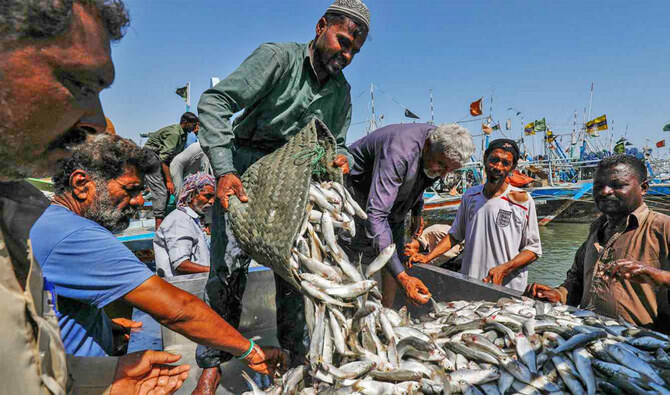
Pakistan’s marine fisheries sector posted strong growth in the first half of fiscal year 2025–26. Seafood exports reached 122,629.11 metric tons, valued at $253.24 million between July and December 2025. Federal Minister Muhammad Junaid Anwar Chaudhry said the performance reflects growing competitiveness in global markets. Export momentum remained consistent throughout the period.
Compared with the same period in FY2024–25, exports rose 19.1 percent in volume and 21.6 percent in value. Last year, shipments totaled 102,942.05 metric tons worth $208.25 million. Frozen fish remained the largest export category, followed by shrimps, prawns, and cuttlefish. Other products, including crabs, sardines, mackerel, and fish meal, also contributed to higher revenues.
China continued as Pakistan’s largest seafood market, importing nearly 59 percent of exports by value. Thailand ranked second, driven by shrimp demand. Other major markets included the UAE, Malaysia, Japan, and expanding destinations in the EU, Saudi Arabia, Vietnam, Kuwait, and the United States. Monthly exports peaked at $56.42 million in November and $55 million in December.
Read more : Sindh Food Authority seals ice cream, limca shop
Non-tax revenue from the fisheries sector also increased to Rs127.7 million, up from Rs118 million last year. The minister highlighted fisheries as a key pillar of the national maritime economy. The sector supports hundreds of thousands of livelihoods in coastal communities, particularly in Sindh and Balochistan. Growth followed pandemic-era recovery through improved processing, cold-chain logistics, and international certification compliance.
Muhammad Junaid Anwar said the government works with international partners to promote sustainable fishing and port infrastructure development. Challenges include climate impacts on migratory species. Emerging tools like eDNA monitoring and blue economy strategies are helping Pakistan align with IMO conventions. The sector’s growth signals stronger regional cooperation and a resilient maritime economy.





3 hours ago
5 hours ago
5 hours ago
5 hours ago
13 hours ago

13 hours ago
- Indian Prime Minister Narendra Modi has reportedly reduced the size of his official motorcade as part of fuel-saving measures amid…
 Russian President Vladimir Putin has welcomed the latest test launch of the country’s strategic nuclear missile Sarmat, calling it “the…
 The Eurovision Song Contest faced renewed controversy on Tuesday after audience members protested during the performance of Israeli contestant Noam…
- At least 13 people were killed in a series of Israeli strikes in southern Lebanon on Tuesday, according to Lebanon’s…

 A major shift in medical terminology has been announced for Polycystic Ovarian Syndrome (PCOS), a common hormonal disorder affecting millions…
 Health authorities are working to contain a potential international spread of hantavirus after new suspected cases emerged across multiple countries,…
 The Indus Hospital, located in Karachi’s Korangi area, has earned widespread recognition for providing free and quality healthcare services to…
 The Healthcare Devices Association of Pakistan (HDAP) has raised serious concerns over the continued presence of banned reusable syringes in…





- Security forces conducted a major clearance Barkhan operation against militants…3 hours ago
- Cambridge International Education has postponed the A Level Mathematics Paper…5 hours ago
- A major financial scandal has surfaced in Faisalabad involving alleged…5 hours ago
- Pakistan’s Defense Minister Khawaja Asif strongly criticized Afghanistan during a…5 hours ago