


Punjab’s Air Quality Hits Dangerous Levels Due to Smog
 Web Desk
|
5 months ago
Web Desk
|
5 months ago
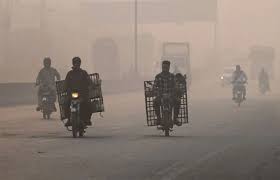
LAHORE – Air quality in various districts of Punjab, including Lahore, deteriorated to dangerously unhygienic levels on Tuesday due to smog. The pollution reached alarming levels, with Rahim Yar Khan reporting the highest air quality index (AQI) at 400 points, making it the most polluted city in the province.
Other cities also faced severe air pollution. Multan recorded 380 AQI, Kasur reached 342, and Lahore’s AQI hit 339 points. Additionally, Khanewal’s air quality level rose to 332 points, signaling a widespread issue across Punjab. Experts have raised concerns over the potential health risks posed by these hazardous pollution levels.
Doctors have advised residents to wear masks to protect themselves from the harmful effects of smog. The polluted air, primarily caused by vehicle emissions and agricultural burning, is a recurring problem in Punjab, especially during the winter months. Smog, a mix of fog and pollutants, becomes more prevalent as temperatures drop, exacerbating health issues.
Last year, Punjab faced similar smog-related challenges, with air pollution soaring to extreme levels in cities like Lahore. The pollution levels were recorded as 80 times higher than the World Health Organization’s (WHO) safe limits. The government had to take drastic measures, including closing schools and limiting business hours to protect the public from the harmful effects.
Authorities are once again working to control the smog, but air pollution remains a significant concern for public health in the region. With the winter season continuing, it’s essential for residents to remain vigilant and take necessary precautions to avoid health risks associated with the ongoing pollution.
READ MORE : Punjab Ends Petrol Rickshaw Production to Tackle Smog
Punjab Chief Minister Maryam Nawaz announced a series of strict environmental measures to combat smog and pollution. A key decision was the province-wide ban on the production of petrol motorcycle rickshaws, as well as a phased move to end petrol motorcycle manufacturing. The government will also require all public departments to buy only electric and hybrid vehicles to reduce emissions and promote sustainable transportation.
In addition to these measures, the Punjab government has implemented a ban on washing vehicles with water at homes. This is part of a broader water conservation strategy aimed at reducing waste. The Cabinet Committee on Smog Control also approved the installation of modern, colored dustbins across the province to improve waste management. New regulations will punish the burning of plastics and other toxic materials, with no concessions for those harming public health or the environment.


8 minutes ago
2 hours ago
2 hours ago
2 hours ago
10 hours ago

10 hours ago
- Indian Prime Minister Narendra Modi has reportedly reduced the size of his official motorcade as part of fuel-saving measures amid…
 Russian President Vladimir Putin has welcomed the latest test launch of the country’s strategic nuclear missile Sarmat, calling it “the…
 The Eurovision Song Contest faced renewed controversy on Tuesday after audience members protested during the performance of Israeli contestant Noam…
- At least 13 people were killed in a series of Israeli strikes in southern Lebanon on Tuesday, according to Lebanon’s…
 A major shift in medical terminology has been announced for Polycystic Ovarian Syndrome (PCOS), a common hormonal disorder affecting millions…
 Health authorities are working to contain a potential international spread of hantavirus after new suspected cases emerged across multiple countries,…
 The Indus Hospital, located in Karachi’s Korangi area, has earned widespread recognition for providing free and quality healthcare services to…
 The Healthcare Devices Association of Pakistan (HDAP) has raised serious concerns over the continued presence of banned reusable syringes in…



- Security forces conducted a major clearance Barkhan operation against militants…8 minutes ago
- Cambridge International Education has postponed the A Level Mathematics Paper…2 hours ago
- A major financial scandal has surfaced in Faisalabad involving alleged…2 hours ago
- Pakistan’s Defense Minister Khawaja Asif strongly criticized Afghanistan during a…2 hours ago